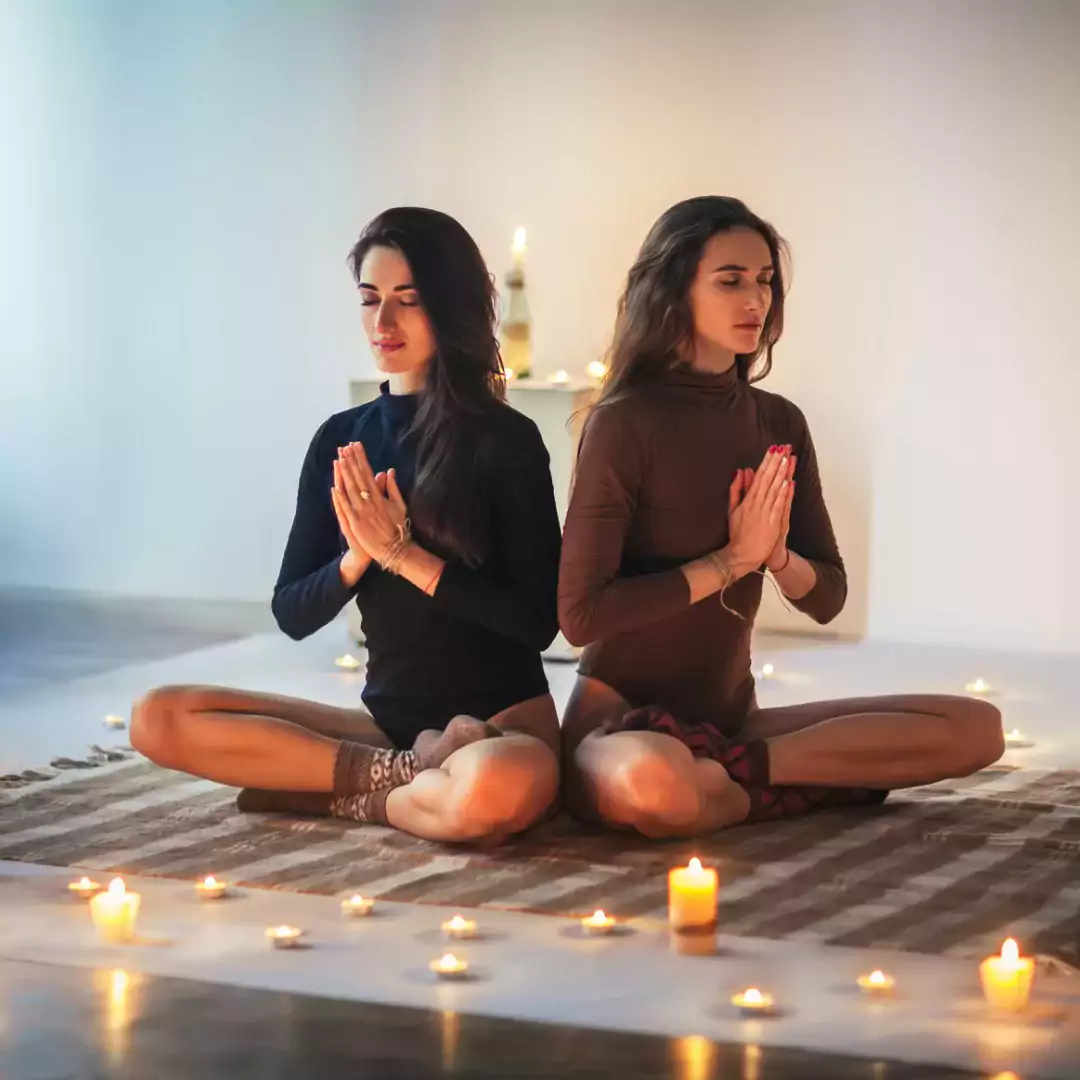

Quick Answer: Mindfulness offers numerous benefits by teaching you to be fully present in the moment, observing thoughts and feelings without judgment. This practice helps reduce stress and anxiety by calming the mind and allowing you to address the sources of worry more effectively. It also provides a shield against overthinking, fostering a more composed and balanced way of life.
Welcome to a process of self-evaluation as well as self-improvement! With its hurried lifestyle, distractions and stress building up in modern society, finding stillness and transparency appears impossible. Here comes the concept of mindfulness – a practice that is so beneficial that it can alter the very way you lead your life. Then, today, in this post, we will talk about the 10 impressive benefits of mindfulness or how it even depends on the daily routine aspect. Prepare for this journey!What is Mindfulness?
At its core, mindfulness is the art of being fully present in the present moment. It involves paying attention to your thoughts, feelings, bodily sensations, and then the surrounding environment without judgment. By immersing yourself in the here and now, you can break free from the shackles of the past and also worries about the future.The Power of the Now
This brings us to the obvious question: what is so great about living in the now? Well, we remember that the present is the only time there is; it is the only moment where, as a general rule, life is changing, where action is taking place, where there are great opportunities, and where happiness can be found. Looking back at it, when mindfulness is integrated into your life, you will appreciate every detail of every moment, as bland as it may seem.Sail Towards Self-Discovery
Mindfulness is not just a fad; it is an individual’s way of life that has been observed for ages. Balance within oneself through mindfulness is a quest that uncovers its wonderful practicable effects.In this post, we shall highlight the importance along with the benefits of mindfulness and its benefits to other facets of life. Such aspects include combating stress and anxiety and enhancing creativity and relationships, which are facts always associated with mindfulness practices.I’m hoping you can see this 4 minute video before it gets taken down:
 Now calm, shed all preconceived ideas, and brace yourself for the journey towards understanding what mindfulness is. Let’s be treated as the normal word mind implies ‘outside the box’ as we delve into the secrets and benefits of seeking a relaxed state. Let’s begin with the first of the ten amazing benefits of mindfulness: ‘’Reduced stress and anxiety’’ and explore all its wonders without wasting time.
Benefit 1: Reduced Stress and Anxiety
Recent developments and increasing stress in social life have placed anxiety in everyday life alongside breakfast and toothpaste. The stress of constantly trying to fulfill multiple functions simultaneously with recurrent deadlines and the stress of having to meet people’s expectations eventually becomes too much to handle. But don’t worry; mindfulness comes to the rescue despite all this.The Calming Power of Mindfulness
Mindfulness is like a breeze that calms the raging waters of one’s mind. To understand how worrying works, only when one knows how to seize the present can one conquer a worry. Instead of being engulfed by disturbing thoughts, we are trained to care for them detached and non-threateningly.Embracing the Present Moment
One such element and perhaps the most beginner-friendly method is mindful breathing. By allowing yourself to focus on inhalation and exhalation of each breath, one cannot help but stay present in the moment. As we go further into this mindful breathing practice, the mind’s activity starts to slow down, and all these thoughts that keep going are no longer present.Unraveling the Source of Stress
Without a doubt, mindfulness enables us to see the sources of our stress and stress fluently. If we do not suppress such feelings and inquire as self-critics, it becomes easier to understand the nature of our reactions and thoughts. This new learning raises the capability to handle stress more effectively and in a more composed manner.A Shield Against Overthinking
Do you sometimes wish to calm your racing heart but spiral into the jaws of overthinking and going in circles? Mindfulness serves as a torch that hails the way out of excessive analysis. Now, rather than winding thoughts over and over, mindfulness encourages us to take a step back from our thoughts.Embracing Imperfections with Compassion
The tendency for perfectionism leads us to become our worst enemies to ourselves and eventually contributes to stress and anxiety. Practicing self-understanding helped us appreciate our weaknesses and protect ourselves without judgment. We cannot be expected to be perfect, and as such, we cannot expect everything to be perfect either.A Sanctuary of Stillness
By consistently practicing mindfulness, we develop an inner sanctuary of stillness. In times of adversity, this inner sanctuary can be used as a refuge, providing peace and strength amid the storms of life. Such stress resilience now becomes an effective weapon to combat worrying and anxiety, and we can gracefully deal with problems instead of being squished by them.The Ripple Effect
The reduction of stress and anxiety through mindfulness does not only benefit the individual target area. When a calm state is experienced, every interaction with others becomes peaceful. There is better attention, better awareness, and better relationships.One of the most astounding benefits of mindfulness in diminishing stress and anxiety is that it is always the entryway to calm and balance within oneself. This understanding and appreciation of the present and self can truly change everything in our lives.Benefit 2: Improved Emotional Well-being
Emotions are present in every single person’s life. These define each person’s existence, and every precious moment gives a new definition of life. However, there are instances in which we are engulfed by feelings, with some falling and some rising. But don’t worry; as we will see, mindfulness is a way of traversing through the myriad of emotions and fostering better emotional health.Embracing Emotional Awareness
It motivates people to have a good relationship with their emotions and to invite them up even into their minds without criticism. Instead of trying to avoid or repress such feelings, we are taught to be with the feelings and to engage with them as gently as possible. Such knowledge of what is emotional provides us with a clearer understanding of emotions and their origins.The Pause and Respond Approach
For instance, we act without thinking in moments of pure joy or extreme anger, where emotions are released in large doses as if there is no tomorrow. One of its most striking advantages is the ability to take a pause. More accurately, before responding to anything. Instead, it is a more conscious and harder choice to make in breaking the vicious cycle of automatic or conditioned emotional responses.Cultivating Emotional Resilience
Due to the imperfections of life and the uncertainties it embodies, emotional resilience is necessary for survival. Mindfulness is like a map that shows the way through turbulent emotions, offering us insights into the fact that it is possible to overcome any adversity. Mindfulness allows us to recover from a low period and effectively deal with stressors.Nurturing Positive Emotions
With time and deeper concentration on appropriate mindfulness, we help ourselves appreciate our positive feelings. Be it happiness, love, or peace, mindfulness helps us enjoy these feelings and lengthen their vividness in our minds.Freedom from Emotional Reactivity
How often are people found absent-minded only to be real and emotional, perhaps even overthinking, making them able to reconsider how things developed? Instead of having this usual pattern and reacting emotionally, we engage in mindfulness to distance ourselves from emotional reactivity. This new emotional capacity is very helpful in dealing with tough situations.Creating Emotional Balance
In the same way that a painter brings together thousands of colors to create a perfect piece of art, mindfulness helps us maintain emotional stillness amid various emotions. No, it does not refer to the denial of negative emotions and the emphasis on positive ones but rather the ability to find a partner in the highs and lows of one’s emotional decorum.Enhanced Empathy and Compassion
As we cultivate mindfulness, we develop a deeper sense of empathy and compassion toward ourselves and others. Mindfulness teaches us to acknowledge and understand the emotions of those around us without judgment, fostering a more connected and harmonious way of relating to one another.A Safe Space Within
Mindfulness practice develops in us an internal space that serves as a safe expedient in the event of emotional overload. When we access and develop such internal positioning, there is a time, regardless of how emotionally stormy it is, outside this comfort zone can be moved. Coming back to emotional well-being is something we all deserve and give to ourselves through mindfulness. When we embrace emotions with love and care, build on resilience, and restore harmony within – a clearer and fuller emotional experience is possible.
Benefit 3: Enhanced Focus and Concentration
In this modern world filled with different distractions, the idea of maintaining concentration feels impossible. Our focus is like birds in the sky, which are flying in multiple directions. However, there is no need to panic because mindfulness will allow us to harness and enhance our attention and concentration more than we have ever experienced.Recognizing the Distracted Mind
Have you ever noticed how your mind drifts somewhere else when performing a certain task or talking to someone? It is a normal thing in every human being, and it is the irresponsible mind. The practice of mindfulness helps us understand the nature of the butt’s mind. Understanding this behavior is helpful as we can always return our attention to ‘now’ even if it has wandered away.The Power of Mindful Breathing
One of the most basic yet powerful strategies that is often commonly used in the practice of mindfulness is focusing on the breath. Each inhale, or each exhale, becomes an opportunity to ground ourselves in the ‘now’, allowing the mind to return to that center within which the thought goes off. This constant center now becomes the beacon that wades through the waters of distraction and focuses our minds.Training the Mind Muscle
Mindfulness is like weight training for the “muscle” of the mind – similar to how an athlete goes through a rigorous workout optimally training the muscles of his body. With persistent practice, however, we learn how to cultivate the mental muscle whereby we devote our attention to a given object or task. We can sharpen our attention as proximal problems become easier to resolve, moreover, the scope of our concentration can also be enhanced.Embracing Single-Tasking
In an era of all forms of media, where multitasking is championed, mindfulness advocates for single-tasking. By fully focusing on a particular activity, whether composing an email or thoroughly enjoying each meal bite, we raise this experience to a new level.The Flow of Deep Concentration
Have you ever found yourself in a state of flow – an indescribable feeling in which you forget the world and everything around you and are absolutely involved in what you do? There is a way to get there, and mindfulness is one of the methods that will help you reach that state where you are completely taken in what is called the flow. By reducing exposures, we allow the flow to come through naturally.Taming the Digital Deluge
Today, including me, everybody is overwhelmed with information in their own ways. Devices keep our attention away from the here and now by sending many notifications every minute. As pleasant as technology is, it does play an increasingly large role in our lives. Creating these limits allows us to concentrate and rest simultaneously amidst the information avalanche.Cultivating Present-Moment Awareness
Mindfulness asks us to pay attention even to minute details and the status of the environment at that time. Whatever we engage in, the intention is to be absorbed in the action and fill each of them to the fullest. This state of mind not only narrows the area of focus but also enriches the content being focused on.Productivity and Mindfulness
Most people think that productive work is the opposite of being mindful, but that is not the case. When we concentrate on a task step by step, we are able to engage ourselves in that task more effectively. The results we achieve are of higher quality, and the time dedicated to every job one performs is more qualitative.And where there is focus and concentration, there is productivity. By learning to center and ground ourselves in the ‘now’, training our attention and practicing single focus, we can cut through distractions and reach enhanced levels of productivity and involvement.Benefit 4: Better Sleep Quality
It’s reassuring to know that after all the day’s activities, there is a given period when one is at rest, both physically and mentally. Unfortunately, for the vast majority, the night is nothing short of a battle full of turmoil, with sleep always failing to draw near. If, at times, you get distressed because you don’t appear to be able to sleep and lay awake in bed tossing and rolling, don’t worry; instead, normal sharpening over sleight is within grasp herein this book.The Sleep-Deprived World
In these current days of fast-paced living, such relaxation comes very rarely; quality sleep has turned out to be a missing essence. Stress factors, fever of emotions, and gadgets are often amidst disturbances to the peaceful, quiet hours of the night. But if you practice mindfulness and are resilient enough, you can conquer other realms of slumber again and set out on volumes of snooze other than the sleeping one.Mindful Unwinding Before Bed
With the onset of evening, it must be appreciated that a transition to night should be gradual. It involves keeping the tablet or any other electronic gadget away and reading books, writing down the day’s activities, or using the Pole Star Detector to relax the mind. This type of mindful preparation for sleep has been proven to lead to quicker falling asleep times and longer sleep duration.Releasing the Weight of the Day
The concept of mindfulness appeals to everyone in that it allows them to forget all or most of the nuisance carried throughout the day’s course before ‘crossing over’ into dreamland. Although at times worrying and troubling, especially going through the vicious cycle of the “what ifs,” it is important to set aside personal and distracting concerns deep enough to be conducive to sleep.The Art of Relaxation
Thankfully, no matter how chaotic life gets, there comes a moment of calmness within the moment of rest. Then, we let go of the contraction of the tissues through progressive relaxation of muscles, imagery, or meditative body scanning and empty the bones of the body and the mind.The Present Moment in Sleep
Have you ever sat up in bed for a long time, not because you couldn’t find sleep but because you just could not stop thinking ahead? Mindfulness teaches us that the present is the only time we can be at peace. When we focus on the body sensations of breathing or the pulse of the heartbeat, we are actually able to concentrate on what is now and forget the past and the future as well.Embracing Restful Sleeplessness
Strangely enough, the more you want to sleep, the harder it becomes to understand when sleep will finally arrive. It is a pleasantly paradoxical number. I would say the problem with mindfulness is welcoming sleeplessness but still being able to rest. By learning to relax and give up control, one develops the attitude necessary for sleep to come effortlessly.A Sanctuary for Sweet Dreams
Our bedroom is also one room in the house where we can completely rest and recharge. Thanks to mindfulness, we know how to concentrate on this area to make it a soft haven. From lowering the lights to applying colors and textures, every detail creates an atmosphere that encourages sleep.Mindful Practices for Midnight Wakefulness
However, here are some garbling techniques that are helpful for the person waking up in the middle of a sleep period and finding it too difficult to be awake, wishing they weren’t and focusing their attention. Breathe slowly and focus on your breath as a technique that may work before you sleep.The Bliss of Mindful Sleep
You will progressively gain open, new sleep patterns when mindfulness is incorporated into your sleep schedule. It is a restful slumber survival oasis, a bottomless pit of restoration and rejuvenation. It is, however, not only the physical energy needed to get through the day that will be restored. It is rather hard to focus on these thoughts, so better sleep quality is a nice bonus on this mindful quest. Yawning and other relaxation methods are skills accomplished through practice, yielding the present moment, the sleeping mind and the environment for sleep.
Benefit 5: Increased Self-Awareness
A largely unutilized aspect in the so-called inner world app is self-awareness – or deeper appreciation of oneself devoid of the superficial. However, with life’s fast-paced and competitive nature, there is hardly time for such reflection. With mindfulness, a plan exists to respond to this inner realm, expanding the opportunity to increase self-awareness.Looking Inward with Clarity
Self-awareness starts with looking into ourselves and trying to break through the borders beyond the masks or the roles played by everyone. When sitting in meditation, we practice self-compassion by developing meta-awareness, the awareness of awareness that allows us to witness thoughts, feelings and actions without attachment. As such, while seeking more understanding in relation to our being, mindfulness also brings a closer understanding of our true identity.Unraveling the Layers of Identity
At various stages of life, we take on other people’s identities, such as being a parent, a friend, a colleague, etc. These involvements often inhibit us. Mindfulness removes such barriers without tearing the person apart; instead, she facilitates patience and control to retrieve the true person. By eliminating such labels, we also come back to reality.The Dance of Emotions
One likes to think emotions are like music, which energizes a live activity. Such is the case with the practice of mindfulness, where such emotions can be enjoyed without being attached to the plot. We also learn to observe the rise and fall of the feelings and understand that they are just visitors staying with us for a little while.Breaking Free from Conditioning
Human beings, from the time of their childhood, are affected by how their parents and society stand and perceive the cultures around them. These conditioning layers, as exposed, will allow people to examine the basic assumptions about the things that are taken and regarded as unquestionable truths. Once we notice those attitudes, we can change the story and begin being ourselves.The Noisy Mind: The Self-Talk
The mind always engages in a web of constant tales about us and the environment within which we exist. Mindfulness allows one to listen to this internal monologue but not to get carried away by it. While maintaining a safe distance from the sweet fables of the mind, we also learn to get in touch with the silence of the mind, which holds intuitive insights.Coming Into Acceptance
Each of us has a shadow – the part of ourselves that we often prefer to keep hidden or never acknowledge. Mindfulness practices invite us to bring love to what might be somewhat dark. Through these imperfections, we can include these traits in our whole selves and promote healing and growth.The Path of Intuition
Among the clatter of the outside world, there lives a feeling that is our true self – our intuition. Mindfulness helps us to listen to this inner voice. By practicing silence and being still, we also help declaim the intuition, leading us further with confidence instead of having second guesses.Nurturing the Inner Compass
With the evolution of oneself, the inner truth/understanding becomes clearer: a guiding compass unfolds that serves a person beholden to her core values and cause. This inner compass now accompanies each of us, along with the practice of inner values, closer to the desired, real, and happy life.A greater self-regard is a pearl that mindfulness practice helps us excavate. Self-exploration does not merely mean removing the layers of identity and repression of painful experiences, but it also means nurturing the inner compass that we call consensus.Benefit 6: Enhanced Resilience
People don’t know what will happen tomorrow and what will turn out today. In many cases, adversity is overcome by Resilience. Through mindfulness, people obtain that internal fortitude that helps them weather the storm.Changing the Perspective
Approaching change is usually not a problem and comes as an advocate or the most furious warrior. Mindfulness helps us accept the gusts of change and transformation and even take them willingly because the wind of change blows. We start healing our lives using the technique of mindfulness because we learn to bend with the winds of change instead of breaking with them.The Art of Letting Go
After disasters, we painstakingly look for anything more or less favorable. That’s where several strategies, as taught by mindfulness, come in handy, letting go of both the past and the future. Awareness, as we know, creates stillness, and even though the external factors may not favor us at that moment, mentally, we stay strong.Transforming Challenges into Opportunities
It is not about avoiding challenges that indicate resilience but about turning such difficulties into opportunities. You have the mental understanding to look at difficult times so that it acknowledges the knowledge to be gained. In the same way, I view these challenges as progress rather than setbacks.The Sanctuary of Mindful Breathing
When stress bears down upon us, mindfulness is the belly of the wave – the breath. By getting attached to mindful breathing, we anchor ourselves towards the eye of the storm within. New moments are created each time a voluntary breath is taken, thus mitigating the depletion of reserves of resilience.Building Inner Strength through Mindfulness
Resilience does not mean being an indestructible hero, but rather, it means being able to draw on one’s hidden core sources. When everything seems too much, we rely on mindfulness – our most gracious fountain of inner resources, allowing for depletion in extreme situations. Furthermore, participating in these processes enables us to cultivate such resilience and be ready to tackle the challenges head-on with a fighting spirit.The Dance of Equanimity
Mindfulness fosters throughout stress work: double variations where calmness is preserved despite the onslaught of the environment’s vagaries. Like dervishes or transcendental practitioners, we whirl up and down, side to side; joyfully and sadly, we meet and let go. This work of stability enables us to flow with grace and ease, not along with the beat of life but in TB.Cultivating Self-Compassion
Resilience does not only mean hardiness; it also takes a softer approach, self-kindness. Mindfulness teaches those human-based skills to understand and be kind to oneself through hard situations and times. When we imagine dealing with people like we do with our own two, we become more able to cope with unpleasant situations.Connection and Support
The terms of resilience in individuals suggest that it is not a one-man’s journey. Instead, she writes, it feels good to be supported by family or community. It is quite amazing that even in our wear of the storm, we also have other’s shoulders to rest on, which often strengthens us even more. Through these hardships, enhanced resilience spins in the tempest and helps me make it through the way. They include accepting changes, strengthening the mind, and even moving with sagacity; mindfulness helps us cope with life’s challenges.
Benefit 7: Improved Relationships
They state that interpersonal relationships are the primary factor that constructs communal existence. Our well-being and happiness depend on how well we relate to other people. Mindfulness paints colors onto the interactions with other people. It not only helps strengthen the already-formed bonds but also assists in building new ones.Empathy: The Bridge of Connection
Of course, empathy is at the core of relationships with others. It is the feeling of being exposed to another person’s emotions and being able to appreciate those emotions at a personal level. Mindful attention helps in the formation of empathy. Empathy requires that attention be shifted toward other people’s feelings and emotions. In so doing, we relieve misconceptions through understanding and experiencing, creating stronger ties.Communication from the Heart
Mindfulness infuses all our interactions, including communication, in such a way that it sees dialogue as more than verbal exchanges. Instead, it becomes an outpouring of the heart, mind, and core of the person. Conversely, we know how to speak mindfully and calmly with caring words. We help others be honest and open while creating a safe environment for vulnerability.Breaking Down Barriers
The bonds between human beings can be affected by barriers, including history, unfulfilled expectations and conflicts. Where relationships are concerned, mindfulness has come in to remove these partitions, allowing us to view relationships differently. It is done by engaging the present in how interactions are handled, and through this, the bitterness of the past is let go, and each and every moment is welcomed with full acceptance.Fostering Patience and Tolerance
In this journey, until the relations are dancing, one cannot go without including a partner called patience and tolerance. Mindfulness cultivates these qualities since we learn to be patient with ourselves and others. There is a realization that a process of growth and development cannot be hasted; therefore, we accept and show understanding of one another’s flaws.The Power of Mindful Presence
One may be in the bosom of people, but he is engrossed in thoughts elsewhere as if relating to the people in the surrounding milieu is not primary. Rather, mindfulness and actualizing words improve the presence and being surrounded by people and performances. In every moment where one is attentive, except every moment of eating, the person can convey love and warm feelings and strengthen friendship and family bonds.Cultivating Gratitude in Relationships
Time and again, gratitude acts like sunshine, warming the soil of relationships and making them yield blossoms. Gratitude finds a voice through mindfulness as it helps us appreciate the little things that do not go unnoticed, which are kind gestures by our dear ones. Gratitude also nourishes the bonds we share with others, further planting love.Embracing Imperfections with Love
Interpersonal relationships are bound to have flaws within them. Mindfulness permits us to accept these flaws in ourselves and others with compassion. On the other hand, most importantly, by letting go of the desire to be perfect, we also allow the space for a person to be “real”.Rekindling Connection
After some time, relationships seem to lack that initial energy. In what way can mindfulness enhance connection? In part by inviting us to be in the moment with loved ones. Quality time is spent mindfully, and then the experiences are turned into memories, enhancing happiness and not forgetting the closeness within the relationships.The Dance of Forgiveness
Forgiveness between couples is an elegant spin on the performance of relationships. How, then, is forgiveness taught in mindfulness not a way of condoning what has been done but rather a means of getting free from bitterness? It is through forgiveness that one is free, and relationships can also be free from scars brought by the past.Improved relationships add the brightest colors to the already colourful tapestry of any human life. Through empathy, communication, and gratitude, core components of mindfulness, our relationships become deeper and more meaningful.
Benefit 8: Boosted Creativity
Creativity is what most lights the fire in people’s souls and makes life a colorful place filled with novelties. However, there are moments when such creativity may wane as it gets shrouded with dark clouds of self-reckoning and mental debris. But do not worry, for it is mindfulness that brings back the gentle gust that benches the embers into a being, to which there follows a reawakening of the creative spirit, followed by the kindling of the great fire of creativeness.Unlocking the Creative Flow
Mindfulness brings the eraser closer to perforated papers filled with problems set to contain creativity. This Self-criticism, on the other hand, makes it difficult to harness creativity; when removed, however, creativity flows with abundance, and so do the thoughts, like mushrooms sprouting in season.Embracing Curiosity and Wonder
In a child-like, inquisitive self lies the kernel of creativity. Mindfulness teaches us to look at the surrounding world as a child does through wonder and admiration of pure and small details, as well as wondering about what is mostly taken for granted. Only then, in that state of curiosity, do we search for inspiration in the ordinary.Quietening the Inner Critic
The internal self-critic is usually a great hindrance to creativity. Mindfulness helps us to notice such sneaky self-critique without being in full control of it. As one distances oneself from the critical inner voice, so do the overly self-critical style narratives evaporate, giving rise to increased self-verbalization and creative novelty.The Canvas of Stillness
Even in the busiest of times, the artist in every one of us seeks refuge within the stillness of a canvas. Mindfulness encourages us to accept periods of silence, during which our thoughts take form, and our imaginings come into being. In the absence of normal daily activity, we are also hungry for the flick of creation.Breaking Free from Mental Clutter
Overbearing thoughts and excessive stimulation can limit the possibility of creative thought. It is where mindfulness helps in the reinstallation of judgement and also reduces the clutter in the mind. Here, within this roomy atmosphere, creativity flourishes.Embodying the Creative Process
Creative processes are more than the working of the brain; they, in fact, are the interplay of the heart, the head and the body. We can walk the whole creative process with the help of mindfulness. When we focus on the creation process as it is, either through painting, writing or even creating, we give our art the genuine drive it deserves.The Intersection of Mindfulness and Art
There is a congruence between art and mindfulness. Many who create, including painters, writers and musicians, find that practice helps them, as they can create art from a place of presence. Equally, the practice of artistic activity can enhance the practice of mindfulness.The Playful Spirit of Creativity
It has been stated that creativity is best promoted in an environment of play. Mindfulness inspires us to engage with our creative impulses light-heartedly without being preoccupied with achieving specific results. In this spirit of play, we also liberate the unlimited power of our creativity.Basking in the Flow State
There’s a certain state, known as ‘flow,’ which is the most advanced form of creative activity, when space and time cease to exist, and a person merges totally with the creative process. In particular, mindfulness helps one to reach that state of flow. Engaging deeply in the innovative course makes us more of a canvas for creativity.Creativity enhancement is a glowing light that emanates courtesy of a contemplative approach. Acknowledging this kind of flow, suppressing the inner critic, and being curious unleashes the desire to create that has been buried in each of us for a long time.Benefit 9: Physical Health Benefits
Along with strengthening the mind and spirit, there comes an embedded health factor of mindfulness practice. Our physical body is our abode, and it must be cherished. A healthy body requires mindful practices, the root of this wellbeing, rather than being portioned aside.The Mind-Body Connection
The mind and body go hand in hand and flourish together like a tree. It connects well with mindfulness as we are more aware of how our bodies express themselves through sensations and feelings. There is an example of this in the work that if people listen to their bodies in a state of mindfulness, they are more aware of the wellbeing of their bodies than when they are not focused.Stress Reduction and Its Physical Impact
The effects of stress cut across all borders and touch our sources of energy and vigor directly and unabashedly. Mindfulness helps as it allows a lot of relaxation to the body since it calms the brain and decreases the adverse effects of stress to the extremity of burn-out. When we practice mindfulness, we practice rest, as balance is core to our happiness, peace, and overall health.Mindfulness and Heart Health
The heart is an instrument that has large capabilities, perhaps even more than our brain. An increase in the heart rate is due to physical activity. Stress plays a cardinal role in moderating the cardiovascular system. Mindfulness helps in taking care of this important organ by lowering blood pressure and improving heart health. With the use of mindfulness, we learn to adopt habits that are encouraging to the heart and also give it love and care.Boosting the Immune System
The immune system is a barrier to opportunistic infections, affording strong protection for one’s health. Among other thieves, mindfulness embraces this shield. It’s extra for the immune system purposes. While developing mindfulness, we also enhance our natural protection.Mindful Eating and Digestive Health
Eating mindfully is an art that helps in feeding not only the body but also the spirit of a person. Mindfulness also changes how we approach eating- how we chew our food and respond to our hunger or fullness. In this sense, mindful feeding promotes digestion and pleasure from meals.Enhancing Physical Performance
Getting into the zone in sports and yoga is pretty likely to ramp up performance, going beyond the standard paradigm of tactics and strategy. By being engaged completely in each action, we can enhance our precision, coordination, stability and even the knowledge of one’s body. The spirit of mindfulness becomes that one aspect that turns our physical activities to the next level.Pain Management through Mindfulness
Mindfulness can be a useful way of dealing with pain for people suffering from such chronic pain. Then, pain no longer becomes an unpleasant sensation as we capture mindful attention to the experience of pain itself. Pain no longer has to be negative if it is adequately skillfully handled since mindfulness calls for gentleness and acceptance.Mindfulness and Better Sleep
A good quality of sleep has been described as the best medicine for restoring wellbeing. Better still, mindfulness is effective in treating insomnia and anything connected with sleep, including healthy sleeping patterns. Luckily, when we add mindfulness to the activities preceding sleep, we then prepare ourselves for restorative sleep.Balancing Hormones with Mindfulness
Hormones control many functions in the human body, including psychological, ulcerative and even metabolic functions. Mindfulness works in rhythm with our hormones by mitigating the effect of stress hormones, which helps maintain hormonal balance. The mental health attributes of mindfulness are thus manifested in reaching optimal wellbeing, integrating stress reduction, heart health maintenance, and increased immunity into the state of health. The health of the body is further protected and enhanced by addressing the mind–body connection and integrating healthy lifestyles.Benefit 10: Overall Life Satisfaction
The crown jewel, that overhanging benefit at the apex of the mindfulness journey is total life satisfaction in its entirety. It’s like when a great fabric weaver works and invests in all the various benefits of mindfulness, each being expertly woven together; the end result is nothing less than complete contentment. As we deeply grow into the teachings of mindfulness, we move towards having a well-rounded and fulfilling life as we have longed.