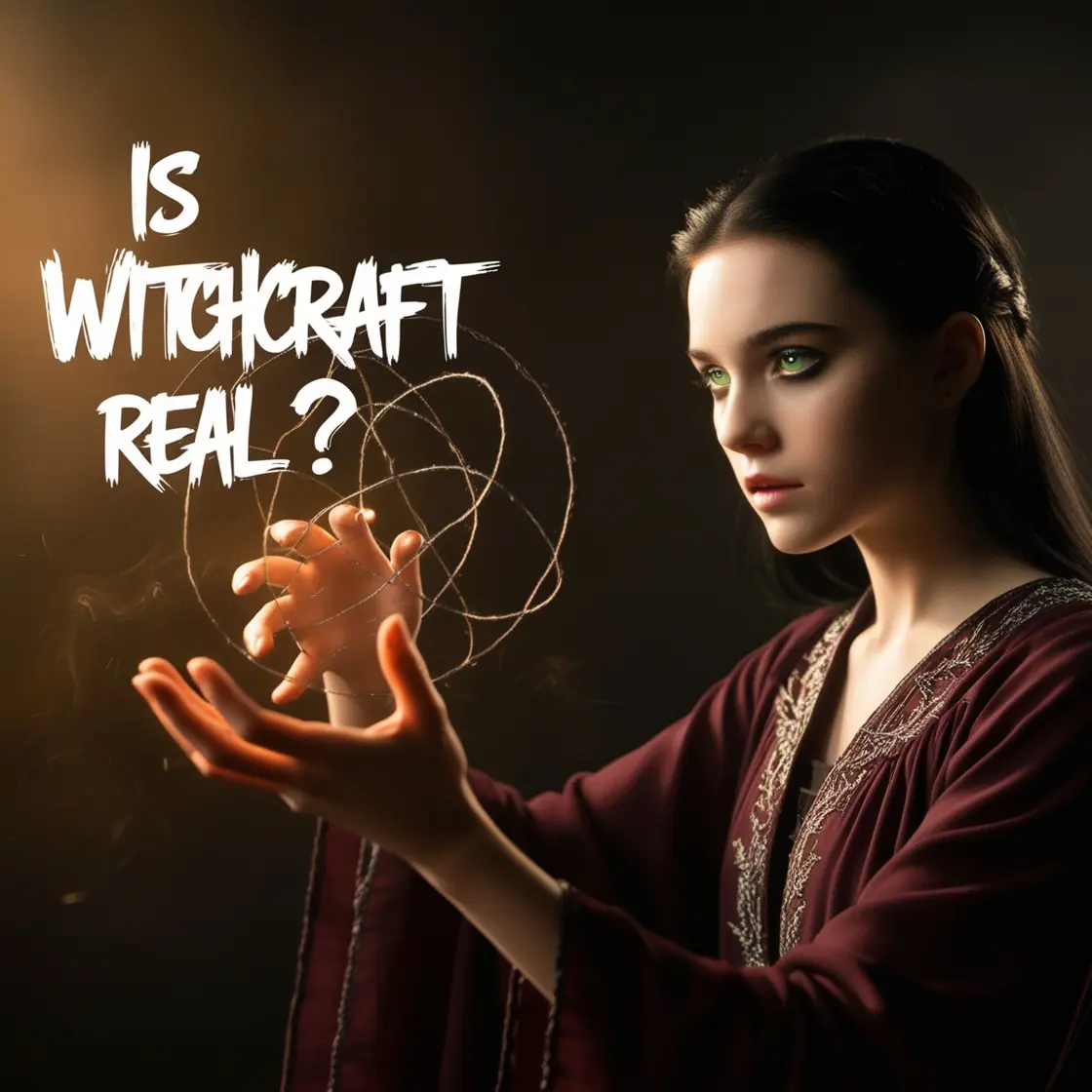
Introduction: “Is Witchcraft Real?”
Witchcraft is an ancient practice, and many still believe in it. But is Witchcraft real? Many would answer yes and say that Witchcraft is extremely real and that they have seen or felt its effects. Others would say no, that it is simply a figment of the mythological imagination with no basis in actuality. So, which is it? Is it real or not?
Definition of Witchcraft
Witchcraft is a practice that imbues spells and rituals. It is usually regarded as having supernatural or paranormal qualities. Depending on the user’s intent, Witchcraft is more or less practical for good or bad.
Sometimes, it might be used to heal others or keep them safe. Unfortunately, it’s not just used for good but bad in the sense of destroying someone or cursing their will. It is usually linked to supernatural things, like ghosts, spirits, and otherworldly beings. However, not all practitioners believe or depend on the supernatural. Some see it as a way to use energy and natural materials to reach a goal.
The Truth About Witchcraft
Better information about the entire concept is needed. People generally picture witches as evil women covered in green who fly on broomsticks, but this couldn’t be further from the truth. Witchcraft is a peaceful, nature-based religion that honors the cycles of life and death. Witches do not cast curses or perform spells; they draw on their powers to commune with the natural world and, when needed, to assist others.
There are many different thriving traditions of Witchcraft worldwide that have been practiced for hundreds of years. Wicca, the most common form of Witchcraft in America, is a modern Pagan religion that honors the feminine divine and nature. Heedless Ones Wicca has the Principle of Threefold Return; whatever we put into the world comes back to us threefold.
History of Witchcraft
The practice of Witchcraft can be traced back to prehistoric times. There is no single reason, however, because one must keep in mind that this practice has existed throughout history, and many cultures and religions have probably crossed over the years. Some historians believe it may have begun with shamanism, the religious practice of communion with spirits.Others say it may have descended from paganism, a religion that praised the natural world and its many gods. Others think it could have been because Christianity spread throughout Europe during the Middle Ages. Whatever the genesis, it has long been associated with magick and sorcery and has often been seen as a threat to mainstream society.Witchcraft Act 1604
When James I became the English king in 1603, one of his first acts was confronting the witchcraft problem. Passed in an attempt to stamp out what was increasingly perceived to be a rising number of witches and warlocks, the Witchcraft Act of 1604 made the act of Witchcraft a capital offense. The law made it a felony to practice any magick and further provided the death penalty for all convicted of Witchcraft. It also permitted the confiscation of all property owned by convicted witches.Witchcraft Act 1735
An act of the Parliament of Great Britain, the Witchcraft Act 1735, made it a felony to accuse someone of Witchcraft. The entry wrote that the measure repealed the Witchcraft Act of 1604, which had made it a capital offense to be a witch. The Witchcraft Act 1735 made claiming someone had been a practicing witch illegal.