In a world that often feels relentlessly fast-paced and demanding, the concept of inner peace can seem like an elusive dream. We’re constantly bombarded with information, expectations, and the subtle hum of daily anxieties. Yet, within each of us lies the capacity to access a profound sense of calm, a stable core that remains untouched by external turbulence. Cultivating inner peace isn’t about escaping reality or ignoring difficulties; it’s about developing a resilient inner landscape that allows you to navigate life’s inevitable storms with grace and clarity. It’s an active, conscious process of tending to your mental and emotional garden, ensuring that even when the winds blow, your roots remain firm.
This comprehensive guide offers a grounded, practical approach to cultivating inner peace. We’ll move beyond generic platitudes and delve into actionable strategies drawn from timeless wisdom and modern psychology. Our journey together will explore how to understand what inner peace truly means, integrate mindfulness into your daily routine, process emotions constructively, reframe your perspectives, build habits that support your well-being, connect with your deeper purpose, and ultimately, sustain this vital state in an ever-changing world. By embracing these practices, you’ll not only discover a lasting serenity but also unlock a deeper sense of self-awareness and an enhanced capacity for joy.
Understanding Inner Peace: More Than Just Absence of Conflict
Often, we mistakenly equate inner peace with the absence of problems, stress, or negative emotions. If only life were so simple! True inner peace is not a passive state of quietude achieved by avoiding life’s challenges. Instead, it is a dynamic, active presence of mind and heart that allows you to remain composed and centered even when external circumstances are chaotic or uncomfortable. It’s the ability to observe your thoughts and feelings without being swept away by them, to respond thoughtfully rather than react impulsively, and to find a steady anchor within yourself regardless of what’s happening around you.
Consider inner peace as an internal compass. While the weather outside might be stormy, your compass needle consistently points north, providing direction and stability. This means acknowledging discomfort, pain, or frustration when it arises, but choosing not to let these experiences define your entire state of being. It’s about developing a profound sense of trust in your own capacity to adapt, learn, and grow, fostering a deep belief that you possess the inner resources to face whatever comes your way. This robust self-trust is a cornerstone of true inner peace, differentiating it from fleeting moments of happiness or temporary relief from stress.
The Foundation of Inner Calm
The bedrock upon which true inner peace is built is self-awareness and presence. Without a clear understanding of your internal landscape – your thoughts, emotions, and bodily sensations – you cannot effectively navigate it. Presence, the practice of being fully in the current moment, allows you to observe these internal states without judgment, recognizing them as transient phenomena rather than permanent fixtures of your identity. It’s in this space of non-judgmental awareness that you begin to create a buffer between stimulus and response, gaining the invaluable freedom to choose how you engage with life.
Cultivating inner peace is not a one-time achievement but an ongoing practice, much like tending a garden. It requires consistent effort, patience, and a willingness to learn from every experience. It’s dynamic because life itself is dynamic; new challenges will always emerge, and your capacity for peace will be tested. Each time you consciously choose to return to your center, to breathe, to observe, and to respond with intention, you strengthen your foundation of inner calm. This resilience is what makes inner peace a truly transformative and lasting state, enabling you to live with greater ease, clarity, and compassion for yourself and others.
Mindfulness as a Gateway to Serenity
Mindfulness is perhaps the most direct and potent tool for cultivating inner peace. It is the practice of paying attention to the present moment, without judgment, to the unfolding of experience moment by moment. Far from being a mystical or overly spiritual concept, mindfulness is a practical mental exercise that trains your attention, much like physical exercise trains your body. By observing your thoughts, emotions, and bodily sensations as they arise and pass, you begin to disentangle yourself from their grip, creating a spaciousness that allows for greater calm and clarity.
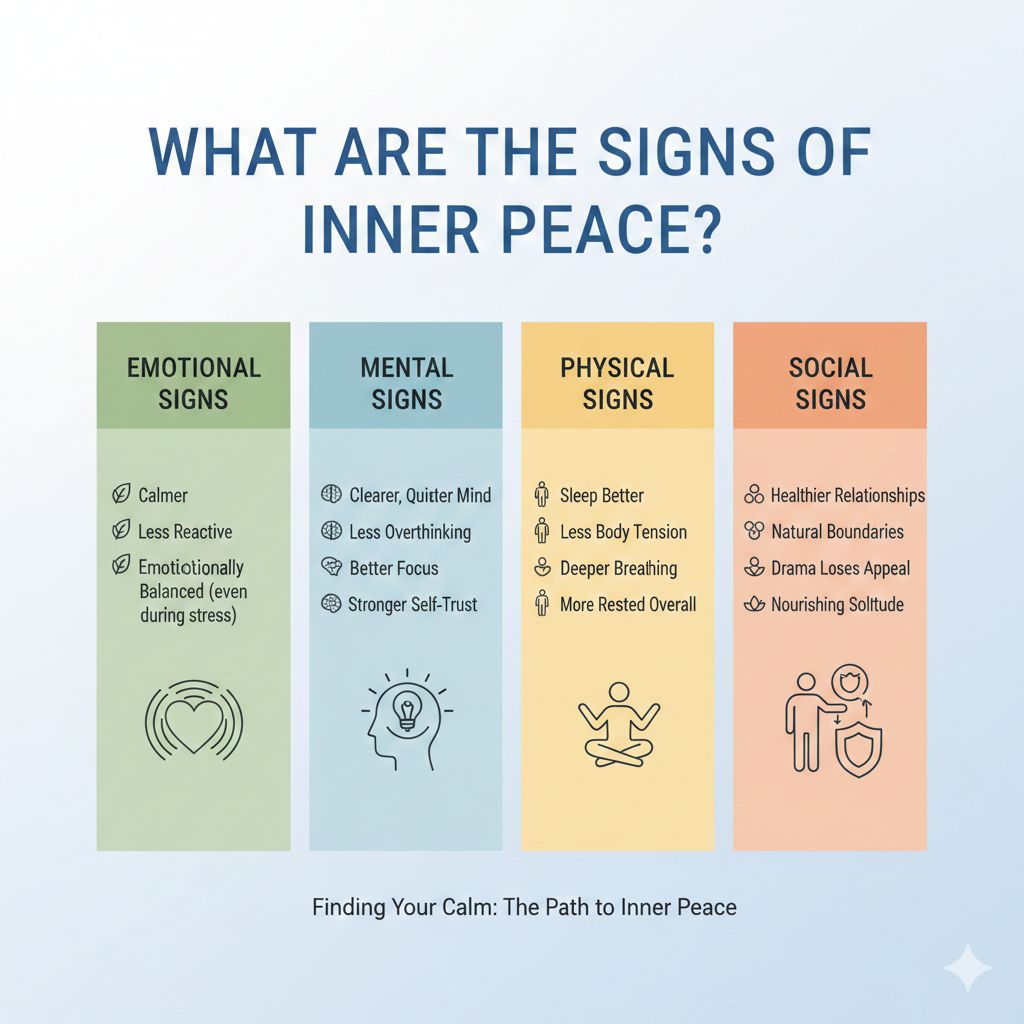
When we are not mindful, our minds tend to wander, often dwelling on past regrets or future anxieties. This constant mental time-travel pulls us away from the only moment we ever truly have: the present. Mindfulness brings us back. It teaches us to notice the intricate dance of our inner world without getting caught up in the drama. We learn to see thoughts as mere thoughts, not absolute truths, and emotions as transient states, not defining characteristics. This simple yet profound shift in perspective is incredibly liberating, paving the way for a deeper and more stable experience of inner peace.
Practical Mindfulness Techniques
Integrating mindfulness into your daily life doesn’t require hours of meditation, though formal practice is certainly beneficial. It’s about weaving moments of conscious awareness into your routine. Here are some practical techniques to get started:
- Breath Awareness: This is the most fundamental mindfulness practice. Simply bring your attention to your breath. Notice the sensation of the air entering and leaving your body. Feel your chest or abdomen rise and fall. When your mind wanders (which it will, countless times), gently guide your attention back to your breath. Do this for a few minutes each day, or whenever you feel overwhelmed. It’s an instant anchor to the present moment.
- Body Scan: Lie down or sit comfortably. Systematically bring your attention to different parts of your body, starting from your toes and moving up to the crown of your head. Notice any sensations – warmth, coolness, tingling, tension, relaxation – without judgment. This practice helps you connect with your physical self and release stored tension, fostering a sense of groundedness.
- Mindful Walking: As you walk, pay attention to the sensations of your feet touching the ground, the movement of your legs, the swing of your arms. Notice the sights, sounds, and smells around you. Engage all your senses in the act of walking. This transforms a mundane activity into an opportunity for presence and inner peace cultivation.
The key to these practices is consistency and gentle persistence. Don’t strive for a perfect, thought-free mind; that’s not the goal. The goal is to develop the capacity to observe your experience as it is, cultivating a non-reactive awareness that becomes a reliable source of serenity. Even short, consistent bursts of mindful attention throughout your day can significantly enhance your ability to access inner peace. Remember, every moment is an opportunity to practice presence, whether you’re washing dishes, drinking tea, or listening to a friend.
Navigating Emotional Landscapes: Processing for Peace
A significant barrier to cultivating inner peace is our often-unskilled approach to emotions. We tend to either suppress uncomfortable feelings, hoping they’ll disappear, or we become completely overwhelmed by them, allowing them to dictate our actions and state of mind. Neither strategy leads to lasting serenity. True inner peace requires a mature and compassionate engagement with our emotional landscape, learning to process feelings constructively rather than letting them fester or explode.
Emotions are simply signals, messengers from our internal world, providing valuable information about our needs, boundaries, and experiences. They are not inherently good or bad; they simply are. The problem arises when we attach stories, judgments, and resistance to these signals. Emotional intelligence, which is deeply intertwined with inner peace, involves recognizing, understanding, and managing our own emotions, as well as recognizing and influencing the emotions of others. By developing this intelligence, we can transform potentially disruptive emotional experiences into opportunities for self-discovery and growth, thereby strengthening our inner calm.
Embracing Discomfort with Awareness
The path to processing emotions for peace often involves a willingness to embrace discomfort. This doesn’t mean wallowing in negativity, but rather creating space for difficult feelings to exist without immediately trying to fix, judge, or escape them. When an uncomfortable emotion arises – be it anger, sadness, fear, or frustration – pause. Instead of reacting, try to observe it. Where do you feel it in your body? What are the sensations associated with it? What thoughts are accompanying it?

This practice of non-judgmental observation is crucial. Imagine yourself as a curious scientist observing a phenomenon. You’re not trying to change it, just understand it. This creates a vital distance between you and the emotion, allowing you to experience it without being consumed by it. Over time, you’ll discover that emotions, like waves, rise and fall. By allowing them to move through you rather than resisting them, they lose their power to destabilize your inner peace. This is a profound shift from being a victim of your emotions to becoming an informed observer.
- Journaling: Dedicate time to write freely about your emotions without censoring yourself. This can be a powerful way to externalize feelings, gain clarity, and identify patterns. Don’t worry about grammar or coherence; just let the words flow. Often, simply putting words to an experience can lessen its intensity and provide insight.
- Mindful Self-Compassion: When difficult emotions arise, treat yourself with the same kindness, understanding, and support you would offer a dear friend. Acknowledge your suffering, remind yourself that imperfection is part of the human experience, and offer yourself comfort. This practice counteracts self-criticism and builds a foundation of inner kindness that supports lasting inner peace.
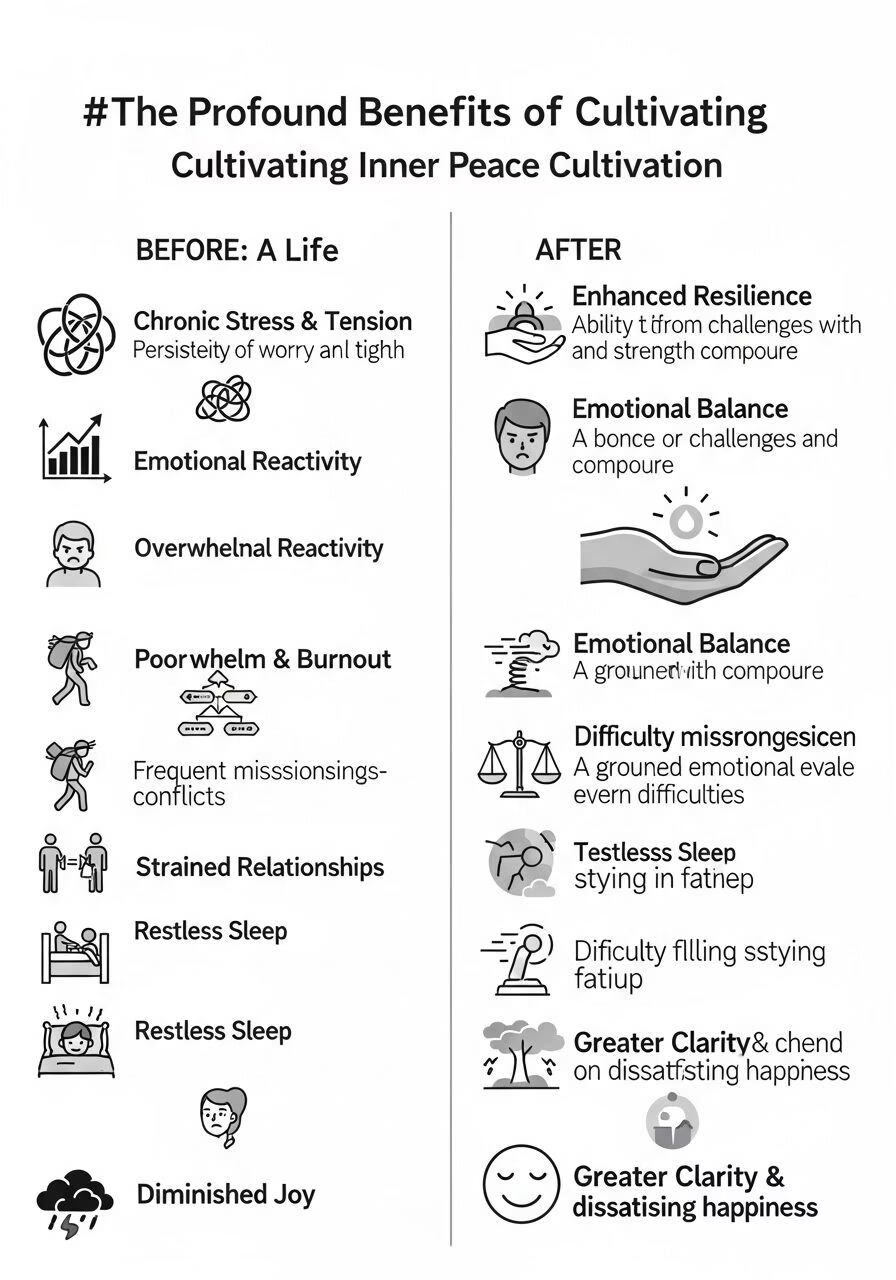
By consistently engaging with your emotions in this grounded and compassionate way, you transform your relationship with them. You move from a place of fear and avoidance to one of acceptance and understanding. This doesn’t mean you won’t feel strong emotions, but you’ll have the internal resources to navigate them without losing your center. This capacity for emotional processing is a cornerstone of cultivating inner peace and fostering genuine well-being.
The Power of Perspective: Reframing for Resilience
Our experience of the world is not solely determined by what happens to us, but profoundly by how we interpret those events. Two individuals can face the exact same challenge, yet one might crumble under the pressure while the other emerges stronger and more resilient. This difference often lies in their perspective – the lens through which they view their circumstances. Cultivating inner peace is deeply intertwined with our ability to consciously choose and refine our perspectives, recognizing that while we cannot control every external event, we almost always have agency over our internal response.
A critical aspect of this is developing a growth mindset. Instead of seeing setbacks as failures, a growth mindset views them as opportunities for learning and development. This doesn’t imply a naive optimism that ignores reality, but rather a grounded understanding that challenges are inherent to life and can be powerful catalysts for evolution. By consciously reframing difficulties, we shift from a victim mentality to one of empowerment, recognizing our capacity to adapt, problem-solve, and ultimately, grow stronger. This active process of reframing is a powerful practice in cultivating inner peace, as it minimizes the emotional turbulence that often accompanies negative interpretations.
Shifting Narratives for Greater Calm
Much of our internal suffering stems from the stories we tell ourselves about our experiences. These narratives, often deeply ingrained from past experiences or societal conditioning, can limit our potential and perpetuate cycles of anxiety or self-doubt. To cultivate inner peace, it’s essential to become aware of these limiting beliefs and actively challenge them. For instance, if you constantly tell yourself, “I’m not good enough,” this narrative will color every interaction and opportunity, creating unnecessary internal conflict. By questioning the validity of such beliefs and consciously constructing more empowering narratives, you begin to dismantle internal barriers to serenity.
One of the most powerful tools for shifting perspective is the practice of gratitude. Gratitude is not about ignoring problems, but about consciously acknowledging and appreciating the positive aspects of your life, no matter how small. When you regularly focus on what you have, rather than what you lack, your brain literally rewires itself to notice more positivity. This doesn’t mean you’ll never face difficulties, but it builds a robust mental habit of appreciation that acts as a buffer against negativity.
Even in challenging times, finding a small flicker of gratitude – for a warm cup of tea, a moment of sunshine, or the support of a friend – can significantly alter your internal state and contribute to a deeper sense of inner peace. Regular gratitude journaling or simply taking a moment each day to list things you’re grateful for can profoundly enhance your overall well-being and resilience.
Building Resilient Habits: Daily Practices for Lasting Inner Peace
Just as a sturdy building requires a strong foundation and consistent maintenance, cultivating inner peace demands the establishment of resilient daily habits. These aren’t grand, overwhelming commitments, but rather small, consistent practices that, over time, weave a tapestry of calm and stability into your life. The power lies not in the intensity of any single practice, but in the regularity and cumulative effect of showing up for yourself, day after day. Consistency is the unsung hero in the journey toward lasting inner peace.
Consider your daily routine as a series of choices that either nourish or deplete your inner reserves. By intentionally structuring your day to include practices that support your well-being, you create a self-reinforcing cycle of peace. This might involve mindful morning routines that set a calm tone for the day, such as a few minutes of silent contemplation, gentle stretching, or focused breathwork before engaging with the demands of the world. Similarly, evening reflections can help process the day’s events, release tension, and prepare for restful sleep, further solidifying your foundation of inner peace. These small, deliberate acts accumulate, building a robust internal system that is better equipped to handle stress and maintain equanimity.
Creating a Supportive Environment
Our external environment significantly impacts our internal state. A cluttered physical space can often lead to a cluttered mind, while a chaotic schedule can breed anxiety. Therefore, a crucial aspect of cultivating inner peace involves intentionally shaping your surroundings and lifestyle to be supportive of your well-being. This extends beyond just your physical space to your digital environment and social interactions.
- Decluttering: A simple yet profound practice is to declutter your physical space. A tidy, organized environment can reduce mental fatigue and create a sense of calm. Start small, perhaps one drawer or one shelf, and notice the mental lightness that accompanies a more ordered space.
- Digital Detox: Our constant connection to screens can be a major source of overwhelm. Schedule regular digital detoxes – even just an hour or two each day, or a full day once a week – to disconnect from notifications and reconnect with yourself and your immediate surroundings. This reduces mental noise and frees up mental bandwidth for inner reflection.
- Connecting with Nature: Spending time in nature has scientifically proven benefits for reducing stress and enhancing well-being. Whether it’s a walk in a park, sitting by a window observing trees, or tending to a small garden, consciously integrating nature into your routine can be a powerful antidote to modern stressors and a direct pathway to inner peace.
Furthermore, establishing healthy boundaries is paramount. This means learning to say no to commitments that overextend you, protecting your time and energy, and choosing relationships that are reciprocal and uplifting. Boundaries are not about keeping others out; they are about protecting your inner sanctuary. By creating a supportive external environment and maintaining clear boundaries, you actively safeguard your inner peace, ensuring that your daily life is aligned with your deepest desire for serenity and well-being.
Connecting with Your Core: Intuition and Purpose
While mindfulness and practical habits lay a solid groundwork, cultivating inner peace also involves connecting with deeper dimensions of self: your intuition and your sense of purpose. Beyond the daily ebb and flow of thoughts and emotions, there resides an innate wisdom within each of us, a quiet knowing that can guide us toward choices aligned with our highest good. This is your intuition, and learning to listen to its subtle whispers is a profound practice in fostering lasting inner peace.
Intuition isn’t a mystical power but a sophisticated form of pattern recognition, drawing on your accumulated experiences and deeper understanding in a way that logic often cannot. When you ignore this inner voice, you often experience dissonance, a subtle unease that disrupts your inner calm. Conversely, when you align with your intuitive guidance, decisions feel more natural, actions flow with greater ease, and a profound sense of rightness settles within you. This alignment with your inner wisdom is a powerful contributor to a stable and unwavering sense of inner peace, as it ensures your actions are in harmony with your deeper self.
Aligning Actions with Values
A significant source of internal conflict and unease arises when our daily actions are out of sync with our core values. If you value integrity but find yourself compromising it, or if you value connection but isolate yourself, a subtle but persistent sense of disquiet will inevitably surface, eroding your inner peace. Therefore, a crucial step in connecting with your core and deepening your serenity is to clearly understand your personal values. What truly matters to you? What principles guide your ideal life? Is it honesty, compassion, creativity, freedom, service, growth, family, or something else entirely?
Once you’ve identified your core values, the practice becomes one of conscious alignment. Regularly assess whether your choices – from how you spend your time and energy to the relationships you cultivate and the work you do – genuinely reflect these values. This doesn’t mean every moment has to be a grand declaration of your values, but rather that the overall direction of your life feels congruent with what you hold most dear.
Making choices that resonate authentically with your values creates an internal coherence that is a powerful engine for inner peace. It reduces internal friction, fosters a sense of purpose, and allows you to live with greater authenticity and integrity. This deep self-alignment is not just a path to peace; it is peace itself, a profound experience of being truly at home within yourself.
Sustaining Inner Peace in a Dynamic World
The journey of cultivating inner peace is not a linear one, nor is it a destination where you arrive and simply stay. Our world is dynamic, constantly shifting, and so too are our internal landscapes. Sustaining inner peace, therefore, is an ongoing practice of adaptation, resilience, and continuous self-awareness. It’s about developing the capacity to return to your center again and again, even when life throws unexpected curveballs, embracing the understanding that impermanence is a fundamental aspect of existence.

Recognizing that inner peace is a practice, not a permanent state, liberates us from the pressure of always having to feel peaceful. There will be moments of stress, sadness, and frustration – that is part of being human. The goal is not to eliminate these experiences but to learn how to navigate them without losing your fundamental connection to your inner calm. This involves cultivating an attitude of gentle acceptance towards the natural fluctuations of life and your own emotions. When you encounter a setback, instead of viewing it as a failure of your peace practice, see it as an opportunity to apply the tools you’ve learned and strengthen your resilience.
Furthermore, sustaining inner peace is greatly enhanced by the role of community and connection. While much of the work is internal, humans are social beings. Sharing your journey with like-minded individuals, engaging in meaningful conversations, and offering and receiving support can provide invaluable anchors during turbulent times. A strong social fabric, built on mutual respect and understanding, reinforces our sense of belonging and reminds us that we are not alone in our pursuit of a more peaceful existence. This external support complements our internal practices, creating a holistic approach to well-being that ensures inner peace remains a vibrant and accessible reality.
Ultimately, cultivating inner peace is a lifelong commitment to yourself – a promise to tend to your inner world with care, compassion, and consistent effort. It’s about learning to ride the waves of life with greater skill, finding your balance even when the waters are rough. By embracing mindfulness, processing emotions, reframing perspectives, building resilient habits, connecting with your core values, and fostering supportive connections, you are not just seeking peace; you are becoming peace. This profound transformation allows you to live a life of greater clarity, purpose, and enduring serenity, contributing not only to your own well-being but also radiating a calming presence into the world around you.