Grief is not a problem to be solved, which is why most advice about it lands badly. There is no technique that makes it shorter and nothing that makes it make sense.
What people reach for instead, across almost every culture and century, is an object. Something to hold, to carry, to place somewhere. That instinct is older than any healing system, and it is the honest reason a stone helps.
A note before we start: grief is not an illness, and it does not need fixing. But if you cannot function after several months, if you are not sleeping or eating, or if you have thoughts of harming yourself, please talk to a doctor or a bereavement counsellor. If you are in crisis right now, contact your local emergency services or a crisis line — in the UK, Samaritans on 116 123; in the US, 988. Please do not sit alone with that.
Understanding Grief
The tidy five stages you have heard of were never meant as a sequence, and grief does not move through them in order. It arrives in waves, often without warning, triggered by something small — a song, a smell, their handwriting on an old list.
It is also physical. Genuine chest tightness, exhaustion, appetite changes, a fog that makes ordinary tasks difficult. That is not weakness; the body processes loss too.
And it does not end. What changes is that the waves grow further apart and you grow around it. Most people describe the same thing years later: the grief did not shrink, their life got larger.
Any practice worth having needs to fit that shape. Not a cure — a companion.
7 Crystals Traditionally Used
Apache tear is the bereavement stone. A translucent black obsidian, it takes its name from a story of grief, and tradition holds it is for people who cannot cry yet. It is the stone most often given to the newly bereaved.
Rose quartz is the stone of gentleness toward yourself, and grief is a period when almost everyone is unkind to themselves — about how they are coping, what they did or did not say, whether they are grieving correctly.
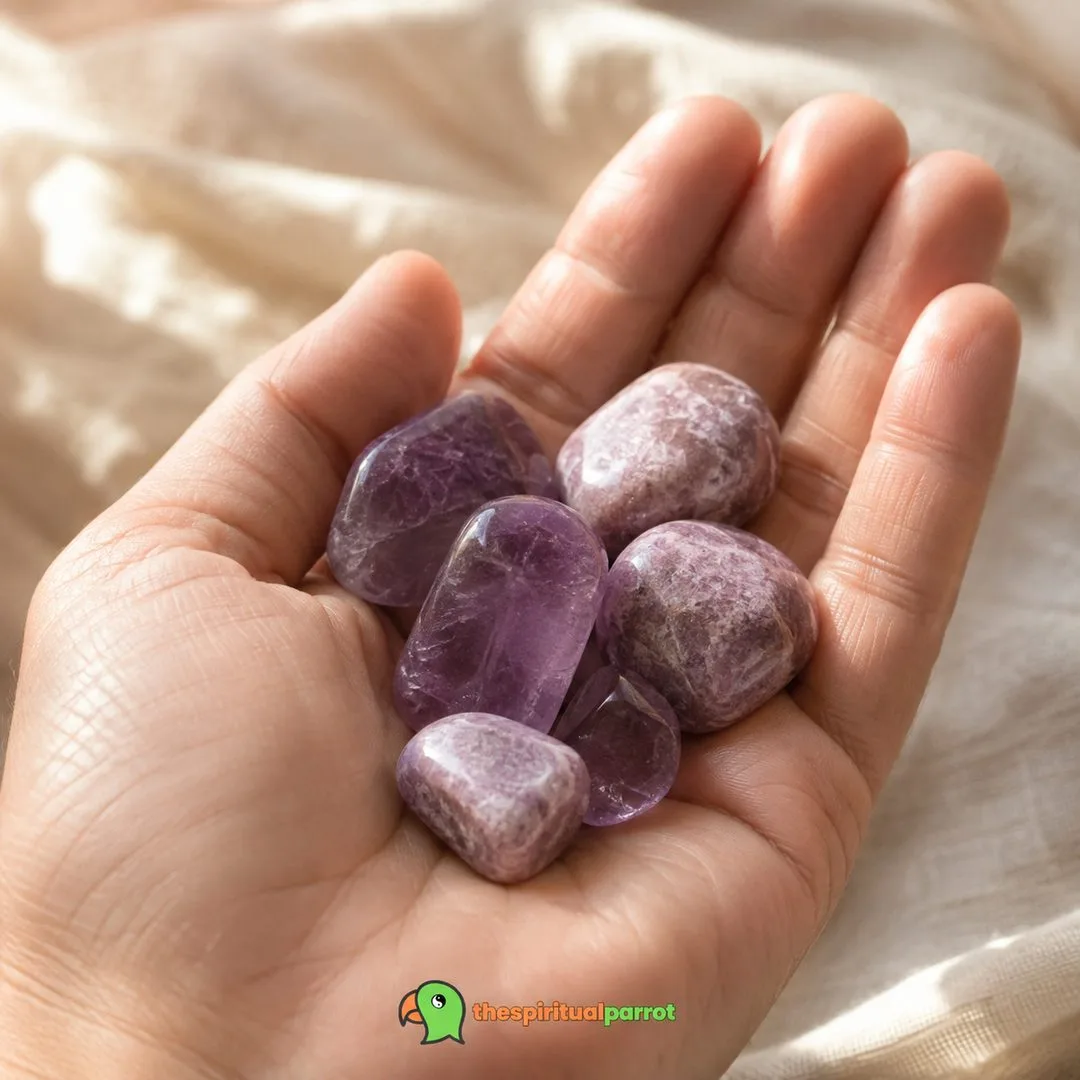
Amethyst is traditionally associated with peace and with the transition between worlds. It is the stone most often placed on an altar or beside a photograph.
Smoky quartz is the grounding stone, used for the unreality of early loss, when nothing feels solid.
Lepidolite carries a long association with emotional steadiness, traditionally used for the anxiety that follows loss.
Moonstone is linked to cycles and to the idea that darkness passes into light again. Often given at the point where someone is beginning to look forward.
Rainbow obsidian is the stone of finding light inside darkness — used later in grief rather than at the start, and often the one people move to when they can think about the person without collapsing.
A Ritual of Remembrance
The practice is simple, and its value is in repetition rather than technique.
Choose one stone and make it theirs. Not a set. One. It becomes the object that means them.
Carry it on hard days. Anniversaries, birthdays, the first Christmas. Hold it in your pocket when the wave arrives. Grief in public is difficult, and something to close your hand around helps more than it should.
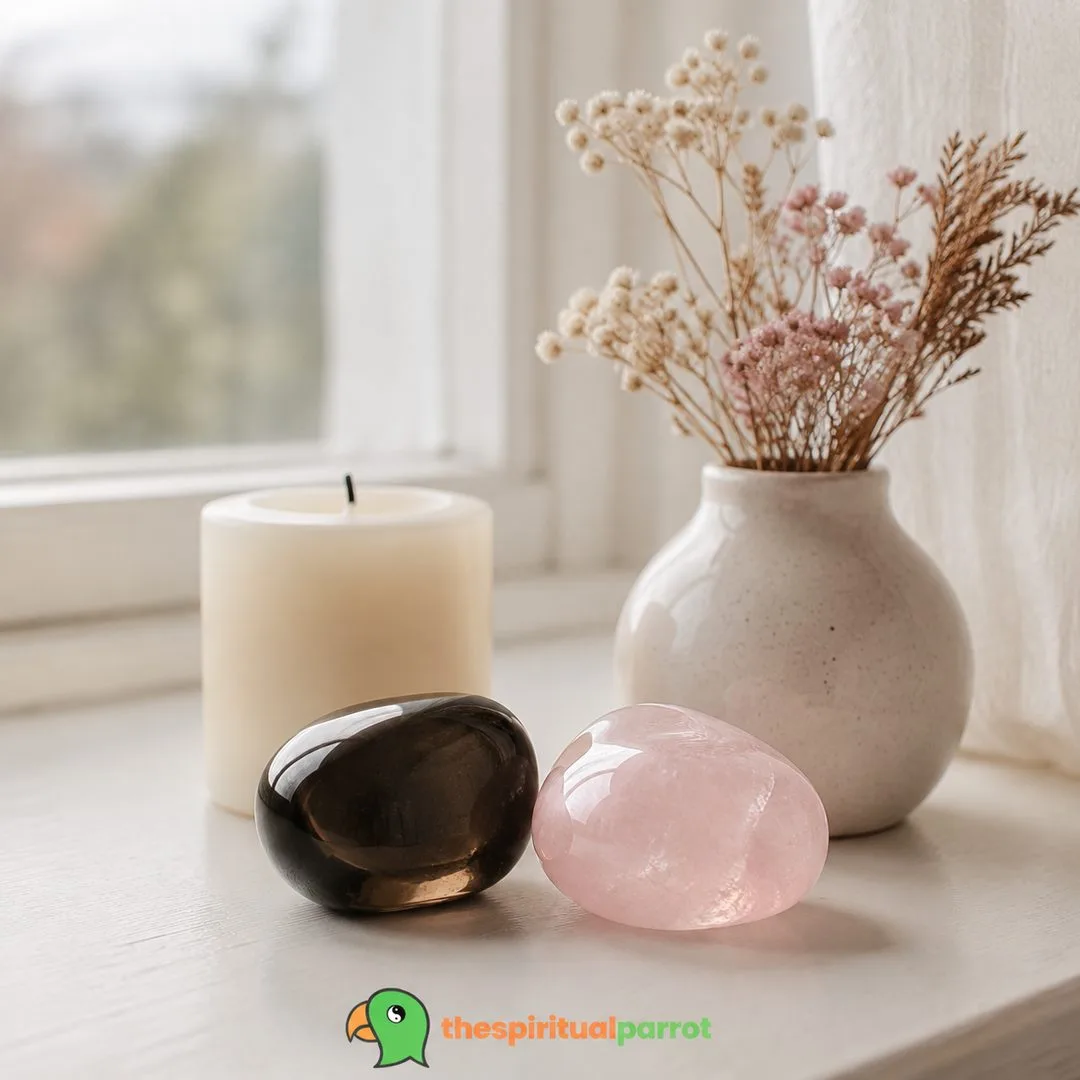
Make a small place. A stone beside a photograph, a candle. Somewhere your remembering has an address, rather than ambushing you everywhere.
Talk to them. Hold the stone and say what you did not get to say. This is one of the oldest bereavement practices there is, and modern grief therapy uses a version of it deliberately.
Let it be heavy. Do not use the ritual to hurry yourself along. If you sit down and simply cry for ten minutes, the practice worked.
A gentle meditation practice can help alongside this, though grief is one of the few situations where sitting in silence is sometimes too much too soon. Start with two minutes if that is all you have, and stop when you need to. Working toward inner peace after loss is measured in seasons, not weeks.
Being Honest About This
Crystals do not shorten grief and there is no evidence they affect it through any energetic mechanism. Nothing shortens grief. That is not a failure of the practice; it is the nature of the thing.
What a physical ritual does offer is genuinely supported: continuing bonds — maintaining a relationship with the person who died rather than severing it — is well regarded in modern bereavement research. Objects, places and rituals of remembrance are how people do that in practice, and they have done it in every culture for as long as there have been people.
Seen that way, a stone in your pocket is not a superstition. It is the same thing as a photograph in a wallet or a name spoken at a graveside.
The one caution is isolation. If the ritual has become a substitute for people rather than a companion to them, that is the point to reach out — to a friend, a bereavement service, a group of others who have lost someone.
Caring for Your Stone
- Moonlight — the gentlest method, and safe for all of these
- Sound or smoke — traditional
- Avoid water with lepidolite and apache tear, both of which are soft
- Keep amethyst and rose quartz out of direct sunlight
Some people never clear a grief stone, on the reasoning that what it holds is the point. That is entirely valid. There is no wrong way to do this.
Final Thought
Nothing on this page will make it hurt less, and I would not want to suggest otherwise.
What a stone can do is give the feeling somewhere to go on the days it arrives without warning — a small solid thing to hold in a queue, or at a desk, or at three in the morning when the house is quiet and it is very close.
That is not nothing. For a great many people it is most of what gets them through the first year.
Be gentle with yourself. Take as long as it takes. And if you are struggling to stay afloat, please tell someone — a doctor, a counsellor, or a crisis line. You do not have to carry this by yourself.