Endometriosis takes an average of seven to eight years to diagnose. Most women spend those years being told their pain is normal, that periods hurt, that they have a low threshold.
By the time a diagnosis arrives, the exhaustion is not only physical. It is the accumulated weight of not being believed. That is worth naming, because it is the part complementary practices genuinely speak to.
Please be clear on this: endometriosis is a chronic inflammatory disease in which tissue similar to the uterine lining grows outside the uterus. It can cause adhesions, organ involvement and infertility, and it is progressive in many cases. It requires proper medical management — hormonal treatment, pain management, and often excision surgery. Crystals cannot shrink lesions, reduce adhesions or slow progression. Nothing below should delay you seeing a gynaecologist.
Understanding Endometriosis
Tissue resembling the endometrium grows where it should not — on the ovaries, fallopian tubes, bowel, bladder or pelvic lining. It responds to your hormonal cycle the same way the uterine lining does: it thickens and bleeds. But with nowhere to go, that blood causes inflammation, scarring and adhesions that can bind organs together.
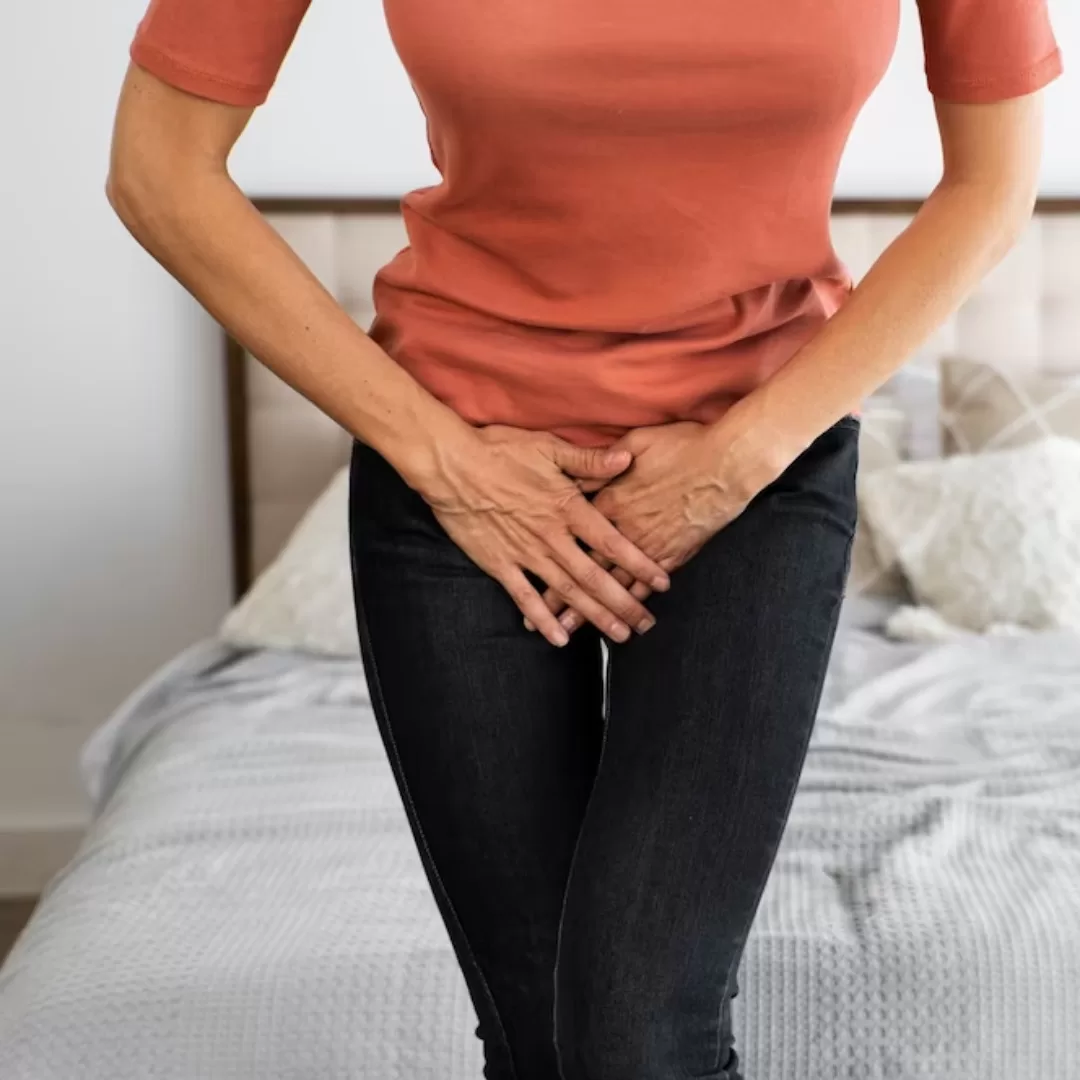
The result is pain that is frequently severe, often not confined to menstruation, and commonly accompanied by fatigue, digestive symptoms, pain during sex, and difficulty conceiving. Roughly one in ten women of reproductive age are affected.
The mental health burden is substantial and well-documented. Chronic pain, delayed diagnosis, dismissal by clinicians, and effects on fertility and relationships compound one another. That is the territory a supportive practice can help with.
7 Crystals Traditionally Used
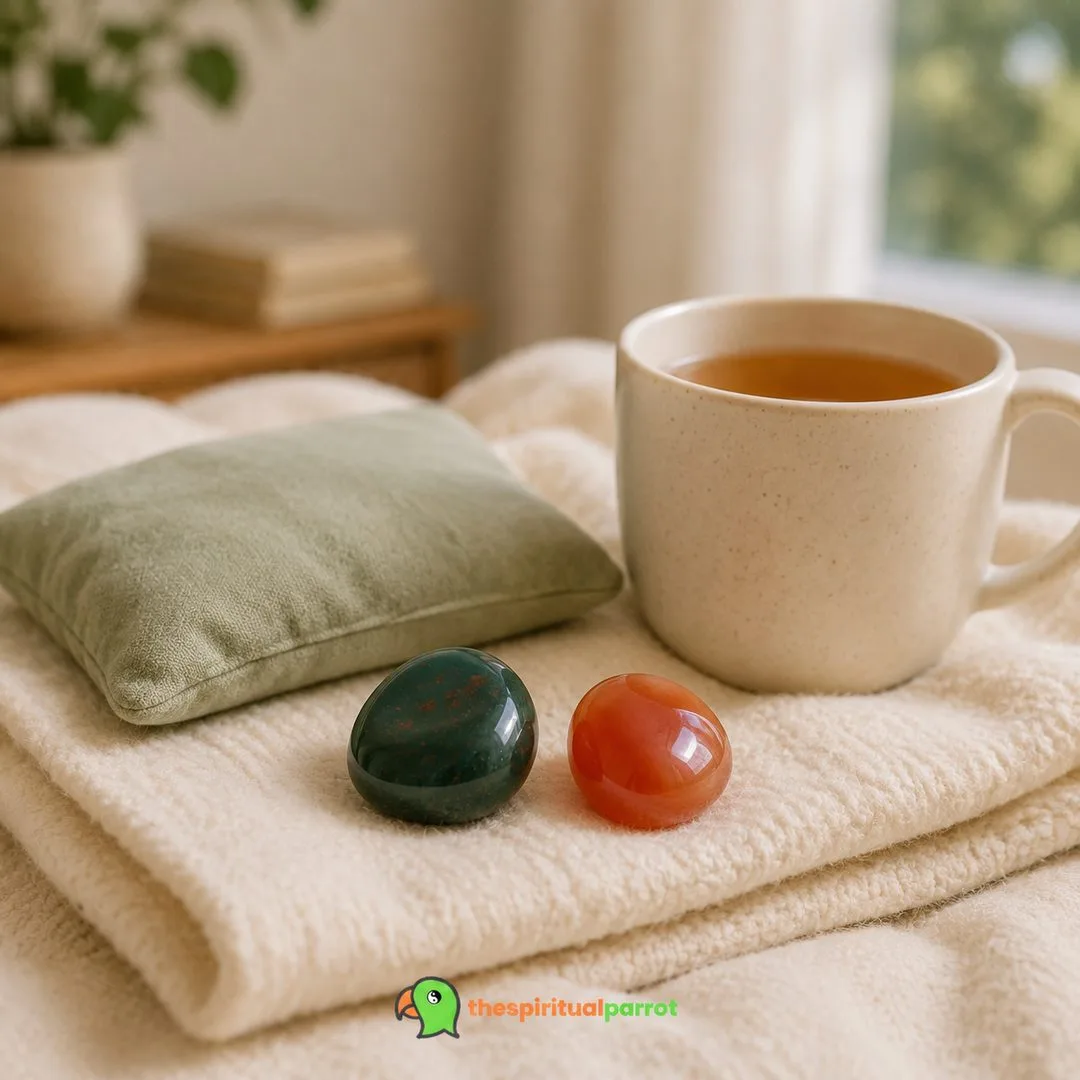
Bloodstone is the primary stone here. Its long association with blood, circulation and menstrual complaints makes it the traditional first choice for period pain across several folk traditions.
Carnelian governs the sacral chakra in the chakra system — the reproductive organs, vitality, creativity. It is the standard stone for anything pelvic, and its warm colour makes it a natural fit for heat-based comfort practices.
Moonstone is tied to cycles and to feminine rhythm, and is traditionally used where periods are unpredictable or unusually heavy.
Chrysocolla is associated with the throat and with expressing what has been silenced. Given how many women with endometriosis spend years unheard, it is the stone most people find they need emotionally.
Malachite is traditionally called a stone of transformation and is linked to pain relief and to the release of old trauma. A practical warning: raw malachite contains copper and is toxic if ingested or inhaled as dust. Use polished stones only, never in water you will drink, and wash your hands afterward.
Amethyst is used for the sleep disruption and anxiety that chronic pain brings.
Rose quartz is the stone of self-compassion, and this is a condition that erodes the relationship with your own body over years. Our guide on heavy periods covers related symbolism.
Working Through a Flare
The practice that helps most during pain is not complicated, and it works because of the heat and the stillness as much as anything else.
Warmth and placement. Lie down, place carnelian or bloodstone low on the abdomen, and put a heat pack over the top. Heat has genuine evidence behind it for menstrual pain — it is comparable to over-the-counter analgesics in some studies. The stone gives you a focus; the heat does physical work.
Breathe through it rather than against it. Slow breathing, exhale roughly twice as long as the inhale, for ten to fifteen minutes. Pain makes people brace and breathe shallowly, which tightens the pelvic floor and worsens cramping. Deliberate slow breathing interrupts that cycle, and this is a real mechanism, not a metaphor.
Hold something. During the sharpest moments, a smooth stone in the hand gives attention an alternative destination. Pain psychologists use distraction and grounding deliberately for exactly this reason.
Track it. Keep a symptom diary and let the stone be the marker for the daily entry. This has direct practical value — endometriosis care improves enormously with good records, and a written pattern is harder for a clinician to dismiss than a description from memory.
A regular meditation practice between flares is worth building too. Mindfulness-based approaches have reasonable evidence for chronic pain, not by reducing the pain signal but by changing how much of your life it occupies.
What Actually Treats Endometriosis
Setting this out plainly, because the alternative-health market around this condition is unusually predatory.
Treatments with real evidence: excision surgery by a specialist surgeon, hormonal suppression, pelvic floor physiotherapy, structured pain management, and anti-inflammatory medication. For fertility, assisted reproduction where needed.
Supportive measures with reasonable evidence: heat, regular movement, an anti-inflammatory diet, sleep, and psychological support for chronic pain.
Crystals belong to the third category — comfort, ritual and emotional processing. That category is real and I am not dismissing it. But there are people selling crystal protocols as alternatives to excision surgery, and that costs women years of disease progression. Please do not let anything here, or anywhere else, delay a referral.
Caring for Your Stones
- Moonlight — safe for all of these
- Smoke or sound — traditional and safe
- Avoid water with malachite; it is copper-based and degrades
- Wash your hands after handling raw malachite
- Keep amethyst and rose quartz out of direct sunlight
Final Thought
Endometriosis is a long illness, and the practices worth having are the ones that survive years of it.
If holding a warm bloodstone against your abdomen through a flare gives you fifteen minutes of feeling like you are doing something for yourself rather than merely enduring — that has value. Chronic illness strips away agency, and small rituals give a little of it back.
Keep it in its proper place. Push for the referral, push for the excision if you need it, keep the diary, take the pain relief. Then light the candle and put the stone where it hurts.
You are allowed both.