
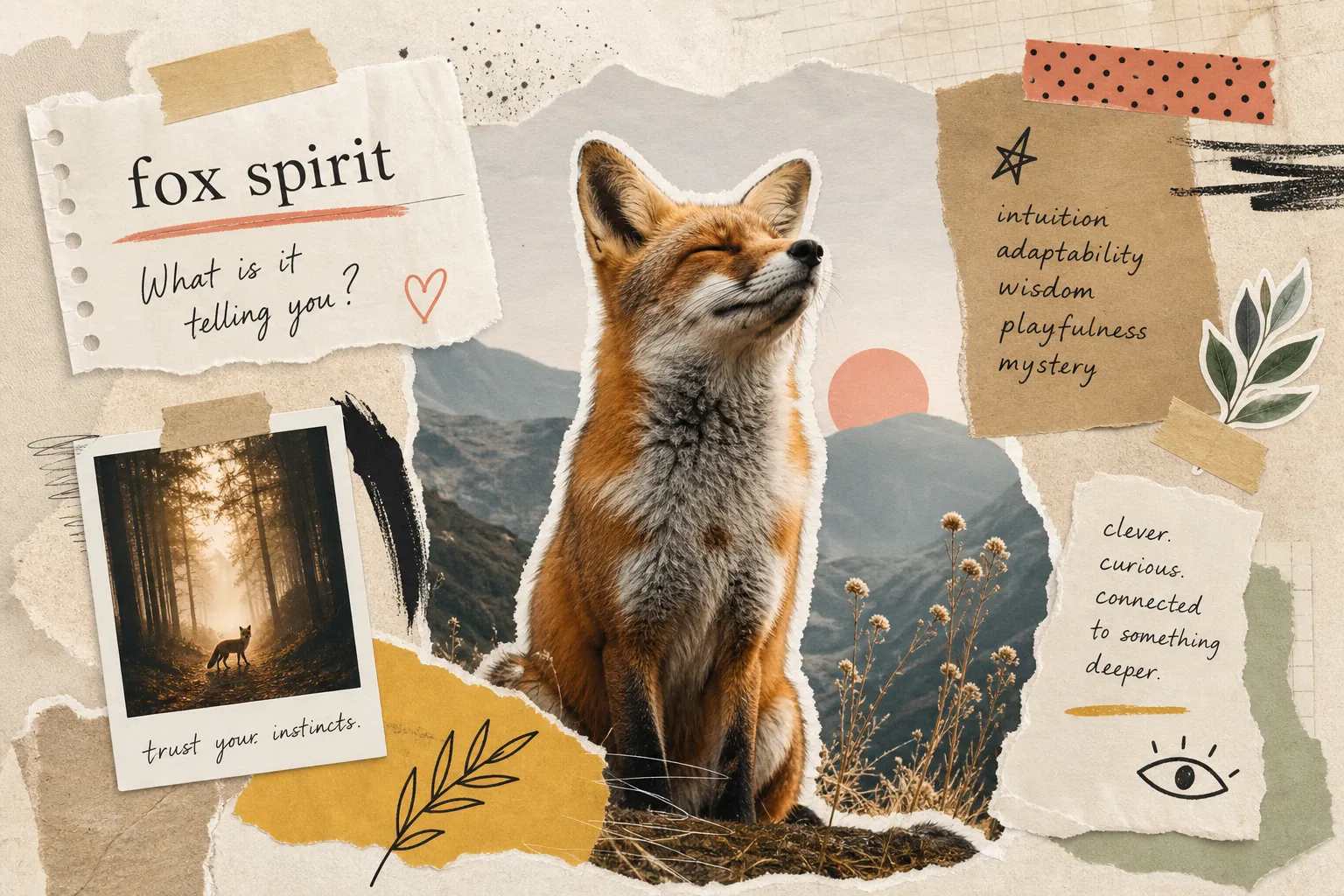
If you keep crossing paths with a fox, whether in a dream, on your morning walk, or in images that seem to follow you into unrelated corners of your life, that’s worth paying attention to. The fox spirit animal meaning is one of the most consistent across world traditions, and it doesn’t show up casually. Across dozens of cultures and thousands of years, its spiritual message stays remarkably consistent: see clearly, move wisely, and adapt before circumstances force your hand.
This guide will help you identify whether the fox is genuinely your spirit animal, understand what it’s communicating right now, decode what fox dreams are pointing toward, and walk away with real practices you can start using this week. If you’re also drawn to angel numbers or want crystal recommendations tied to your spiritual path, The Spiritual Parrot covers all of that in depth, and the fox fits neatly into a much wider conversation about intuition-based spiritual tools.
What fox symbolism looks like across world traditions
Three of the richest cultural frameworks for understanding the spirit animal meaning, fox, come from the Lakota, Japanese, and Celtic traditions. They don’t all say the same thing, but they agree on one point: the fox sees what others miss. That’s the root of everything.
The Lakota tradition: fox as medicine animal and strategic teacher
In Lakota culture, Šuŋgíla (the fox) functions as a practical guide, not a mythological abstraction. Fox medicine was understood to include the ability to reveal the location of healing herbs, teach safe passage through dangerous territory, and help warriors move with disciplined, quiet intelligence. This isn’t trickery for its own sake. It’s sharp strategy rooted in careful observation and survival skill.
The Lakota Tokála, or Kit Fox Society, was a respected warrior society that drew directly on fox symbolism. Scouting, vigilance, and protection were its core functions. Fox medicine in this tradition is about controlled intelligence applied under real pressure, which gives the archetype a grounded, serious quality that often gets lost in pop-culture versions of fox symbolism.
Japanese kitsune: the messenger between worlds
The Japanese kitsune is a fox of an entirely different dimension. Tied to the deity Inari and often found at Shinto shrines, the kitsune is a shape-shifting supernatural being that bridges the human world and the spirit world. Its spiritual power grows with age, expressed through the number of tails: one tail at birth, gaining another every hundred years, until it reaches nine tails and its fullest divine form. Some traditions describe a tenth evolution, the tenko or celestial fox, white or golden and in direct service to Inari.
What this tradition adds to the fox’s symbolic profile is transformation and hidden knowledge. The kitsune doesn’t just observe. It crosses thresholds. It carries sacred messages. It knows things that operate beneath the ordinary surface of events, which makes it a fitting symbol for anyone navigating a period of deep personal change.
Celtic fox symbolism: wisdom at the edge of the known
In Celtic folklore, the fox is consistently a guide through unfamiliar terrain, both literal and spiritual. It appears at liminal times, dawn, dusk, forest edges, crossroads, and is linked to the wisdom available at transition points. Where the Lakota tradition emphasizes strategic survival and the Japanese tradition emphasizes supernatural transformation, the Celtic fox specializes in quiet discernment and the courage to move into the unknown without forcing clarity before it’s ready.
Despite these cultural differences, all three traditions place the fox at the intersection of intelligence and perception. The fox doesn’t muscle through; it reads the situation first, then moves.
Spirit animal meaning fox: the core traits people with fox energy carry
Not everyone who finds the fox meaningful is actually carrying fox energy. But people who do tend to recognize these patterns in themselves without much prompting.
Cleverness that prefers the indirect path
Fox people rarely solve problems by going straight through them. They find the side door, the smarter angle, the solution that was hiding in plain sight while everyone else was pushing harder against the obvious wall. If you’re often the person in the room who already saw how things would unfold before anyone else started worrying, that’s a fox quality. It’s not manipulation. It’s pattern recognition paired with patience.
Adaptability as a survival skill, not a compromise
The fox totem animal has a strong relationship with change, specifically the ability to thrive when circumstances shift rather than freeze or collapse. People with this energy often feel more alive in uncertain situations than in rigid ones. That’s not the same as being a pushover or having no boundaries. Fox adaptability happens on its own terms, driven by intelligence rather than people-pleasing. That distinction matters more than it might seem at first.
Intuition, timing, and knowing when to stay quiet
The fox’s stealth isn’t fear. It’s discernment. People carrying fox energy tend to have a strong ability to read hidden dynamics in a room, sense when something is off before they can articulate why, and know when to act versus when to go quiet and watch. This discretion is one of the most underrated forms of power the fox archetype carries, and it’s often what sets fox people apart in situations that require strategic restraint.

Signs the fox is showing up as your spirit guide
A spirit guide doesn’t hand you a business card. The signs tend to be subtler, but they’re consistent once you know what to look for.
Repeated sightings and the quality of attention they demand
One fox crossing the road is a fox crossing the road. But when fox encounters cluster together in a short period, or when a single encounter stops you cold in a way a random animal sighting usually wouldn’t, that repetition and quality of attention matters. Daytime fox sightings are especially significant because foxes are naturally stealthy and tend to operate at dawn and dusk. A fox visible in full daylight, or one that holds eye contact and lingers near you, is behaving outside its ordinary pattern. That’s worth writing down.
Fox synchronicities beyond physical sightings
The fox spirit doesn’t limit itself to physical appearances. It surfaces in book covers, conversations you weren’t expecting, background artwork in a show you’re watching, or a word that keeps appearing across unrelated contexts. When the same symbol crosses your path through multiple unconnected channels in a concentrated window of time, that’s worth tracking rather than dismissing as coincidence.
A deep personal resonance with fox traits
Ask yourself honestly: do you identify more with cleverness than brute strength? With adaptability over rigidity? With observation over loud action? A strong self-recognition of fox-like qualities is itself meaningful data. Spirit animal recognition is rarely a dramatic lightning-bolt moment. More often it’s a quiet sense of: yes, this is how I actually move through the world. That recognition is its own kind of confirmation.
Fox dream meaning: what your dreams are telling you
Fox dreams are among the most consistently meaningful across both spiritual and psychological frameworks. The details and emotional texture of the dream shift the interpretation significantly.
Reading the fox’s behavior in the dream
The fox’s behavior inside the dream is your first interpretive key. A calm, friendly fox typically signals that your intuition is active and reliable, trust what you’re sensing. A fox chasing you points toward something you’ve been avoiding that needs to be confronted directly. A fox holding eye contact carries a direct spiritual message worth sitting with quietly after you wake.
Multiple foxes in a dream often flag hidden social dynamics or political undercurrents in your waking life. A dead or injured fox signals blocked instincts or the natural end of a situation that no longer needs to be held onto. In each case, note the specific behavior before anything else.
The emotional tone matters as much as the plot
The sequence of events in a fox dream matters less than how the dream felt. A fox that unsettled you carries a fundamentally different message than one that brought calm or recognition. The emotional residue of the dream, that lingering feeling when you first wake, often holds the real message before the rational mind starts rewriting the story. Journal the feeling immediately, before it fades. That feeling is the fox’s actual communication, and it’s more reliable than any standardized symbol list.
How to actually work with fox energy in daily life
Working with a spirit animal isn’t a one-time interpretation. It’s an ongoing relationship that benefits from regular, intentional practice.
Fox visualization meditation (try this tonight)
Find a quiet space and settle your breath for two to three minutes. Visualize yourself standing at the edge of a forest at dusk. A fox appears at the tree line and approaches you calmly. Ask it one direct question about a situation in your life right now. Then go completely still and notice whatever impressions arise: images, feelings, words, a sudden sense of knowing. Don’t force an answer. Stay with the stillness for another minute, then slowly return to the room. Write down what surfaced immediately, even if it feels incomplete or unclear.
Journaling to track fox messages over time
A dedicated fox journal, used consistently over several weeks, will reveal patterns that a single dream or sighting never could. Log every sighting, synchronicity, and fox dream meaning alongside the emotional context of that day. Return to it weekly and look for themes. Two journal prompts worth using regularly: “Where in my life am I using force when I should be using strategy?” and “What is the fox pointing me toward that I keep looking away from?” The second question tends to produce the most useful answers because fox energy is almost always flagging something you’re actively avoiding.
Crystal allies that match fox spirit energy
Two crystals pair naturally with fox work. Labradorite supports intuition, psychic awareness, and the kind of inner sight that lets you read beneath the surface of people and situations. It’s the stone to hold during meditation or carry on days when you need to discern what’s actually happening in a complex dynamic. Carnelian works the other side of fox energy: action, adaptability, and decisive movement. When you know what you need to do and hesitation is the only thing in your way, carnelian helps. Carry it during a day that requires strategic thinking, hold either stone during your fox meditation, or place both near a small fox altar as an anchor for your ongoing practice.
If you want to go deeper into either crystal’s profile, or explore angel number messages that often accompany fox sightings, The Spiritual Parrot has detailed guides on both that pair well with this kind of intuitive spirit work.
What the fox is actually asking you to do
The spirit animal meaning, fox, surfaces three core messages regardless of culture, tradition, or context: look closer than you’re currently looking, and adapt before the situation demands it. More than anything, trust what you sense before you can prove it with logic. These aren’t abstract ideals. They’re practical operating principles for anyone navigating change, complexity, or a situation that requires more than straightforward effort.
Working with fox energy is ongoing. One good dream or a striking sighting is a starting point, not a complete answer. The fox rewards consistent attention and deliberate practice far more than it rewards one-time interpretation. Start the journal tonight. Try the meditation this week. And the next time a fox crosses your path, stay present long enough to feel what the encounter is asking you to notice.
For anyone deepening their relationship with fox as a spirit animal, alongside broader spiritual tools like number patterns, crystal allies, and daily practices, The Spiritual Parrot is built exactly for that kind of integrated, practical exploration.