A PCOS diagnosis often arrives after years of being told nothing is wrong. Irregular cycles, unexplained weight changes, skin and hair symptoms, and a growing sense that your own body has stopped making sense.
That experience — being dismissed, then handed a condition with no cure — is why so many women with PCOS end up exploring complementary practices. It is a reasonable response to feeling unheard.
Please read this first: PCOS is a genuine endocrine condition with real long-term risks, including insulin resistance, type 2 diabetes and fertility complications. It needs medical management. Crystals cannot regulate hormones, restore ovulation or treat insulin resistance. What follows is a complementary emotional practice, offered alongside proper care rather than in place of it.
Understanding PCOS
Polycystic ovary syndrome is a hormonal disorder affecting roughly one in ten women of reproductive age. Its core features are irregular or absent ovulation, elevated androgens, and often insulin resistance underlying both.
The symptoms people actually live with are irregular or missing periods, acne and oily skin, excess hair growth or scalp hair loss, weight that resists ordinary effort, and difficulty conceiving. Mood symptoms are common too — the rate of anxiety and depression among women with PCOS is substantially higher than average, and that is a direct consequence of the condition rather than a coincidence.
That emotional load is the part crystal practice speaks to. Not the hormones. The experience of carrying it.
7 Crystals Traditionally Used for PCOS
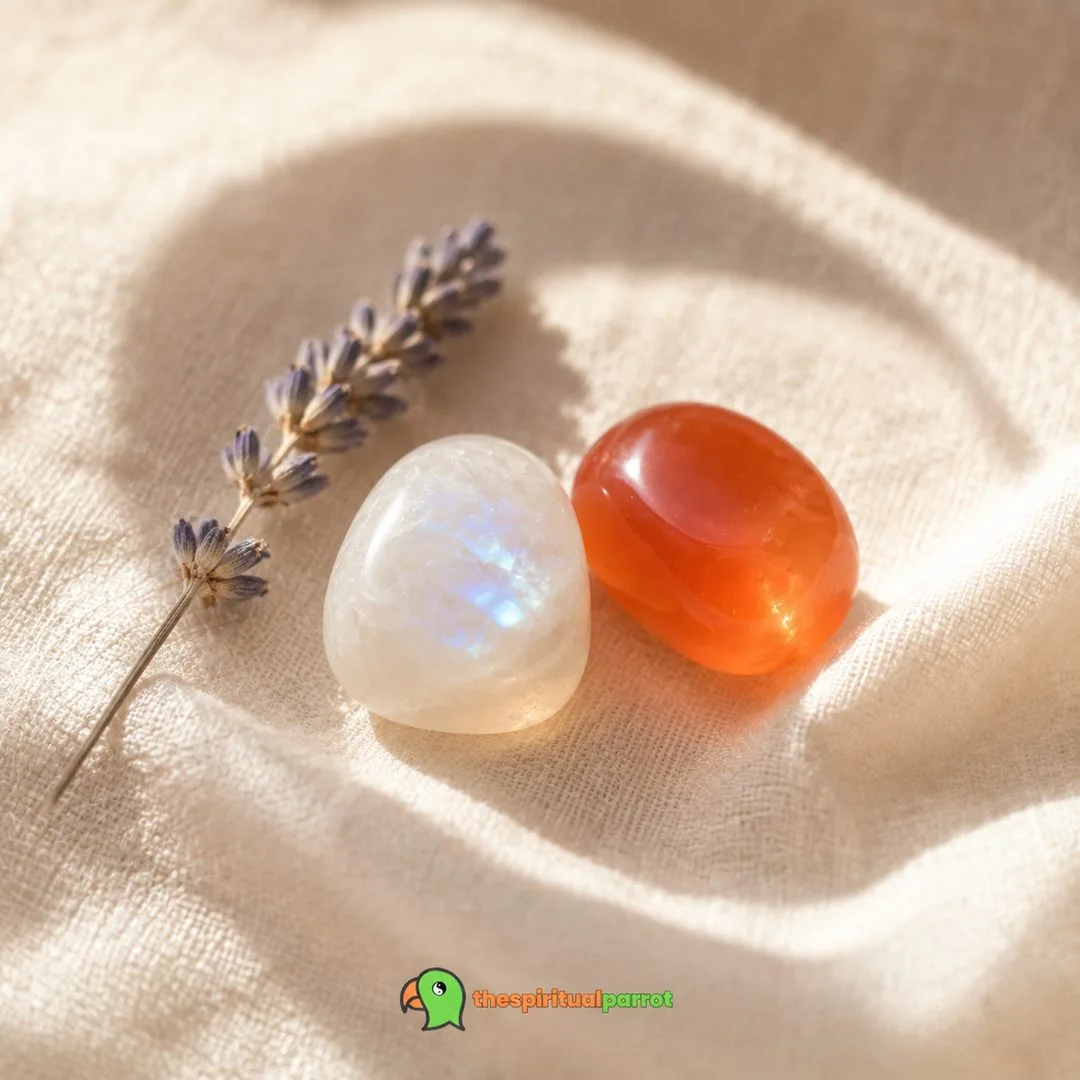
Moonstone is the primary stone for this, and the association is old. Its name, its pearlescent sheen, and its long link to lunar cycles have made it the traditional stone of menstrual rhythm and feminine balance. Where cycles have become unpredictable, moonstone is the stone people reach for first.
Carnelian is tied to the sacral chakra, which in the chakra system governs the reproductive organs, creativity and vitality. Its warm orange colour makes it the traditional choice for restoring energy and confidence.
Chrysocolla is associated with the throat and heart, and traditionally used for expressing what has gone unspoken. Given how many women spend years being told their symptoms are normal, that association lands.
Rose quartz is the stone of self-compassion, and PCOS is a condition that attacks the relationship with your own body. Weight, skin, hair, fertility — it targets exactly the things women are already judged on.
Amethyst is used for the anxiety and sleep disruption that often accompany hormonal conditions.
Unakite is traditionally linked to reproductive health and, in folk practice, to fertility support.
Bloodstone is associated with circulation and vitality, and is a traditional stone for menstrual complaints generally. Our guide to the spiritual meaning of heavy periods covers related cycle symbolism in more depth.
Working With Your Cycle
If you have any cycle at all, even an irregular one, traditional practice suggests working with its phases rather than using the same stone daily.
Menstrual phase — bloodstone or smoky quartz. A time for rest and lowered demands.
Follicular phase — carnelian. Traditionally the rebuilding phase, associated with returning energy.
Ovulation, if it occurs — moonstone. The peak of the lunar association.
Luteal phase — amethyst and rose quartz, for the mood symptoms that tend to cluster here.
If your cycles are absent or wholly unpredictable, an alternative traditional approach is to follow the moon instead: new moon for rest and intention, full moon for release. Some women with PCOS find this genuinely steadying, because it restores a rhythm to track when the body is not providing one.
How to Use Them
Sacral placement. Lie down, place carnelian or moonstone just below the navel, and breathe slowly for ten to fifteen minutes. This is the most common practice and the one most people find grounding.
Carry a stone. Moonstone in a pocket, touched at difficult moments.
Cycle tracking with intention. Keep a journal of symptoms and moods, and use the stone as the physical marker of the daily check-in. This one has genuine practical value beyond the ritual: symptom tracking gives your doctor better information, and PCOS management improves with good data.
Bath practice. Moonstone or rose quartz beside the bath, warm water, twenty minutes, no phone.
Pairing these with a consistent meditation practice helps more than the stones alone. Stress raises cortisol, cortisol worsens insulin resistance, and insulin resistance drives PCOS. That chain is real and documented, which makes stress reduction one of the few complementary practices with a genuine mechanism behind it.
What Actually Helps PCOS
Being straightforward here matters more than usual, because the gap between what sells and what works is unusually wide with this condition.
Interventions with real evidence: weight management where relevant, resistance training and regular movement, a diet that manages blood sugar, metformin or inositol for insulin resistance, hormonal treatment where appropriate, and for fertility, medical ovulation induction.
Interventions with meaningful supporting evidence: inositol supplementation, adequate sleep, and stress reduction — the last through the cortisol pathway described above.
Crystals sit outside that list. They belong to the emotional and ritual side of living with a chronic condition, which is a real need and a legitimate thing to address. They are simply not a hormonal intervention, and any source suggesting they can restore ovulation is misleading you about something that matters.
Caring for Your Stones
- Moonlight — the traditional method, and particularly apt for moonstone
- Sound — a bell or singing bowl
- Earth — buried overnight
- Avoid salt water with moonstone and chrysocolla, both of which are soft
- Keep amethyst and rose quartz out of direct sun, as both fade
Traditional practice suggests clearing monthly, or after a period of heavy use.
Final Thought
PCOS is a long condition, often diagnosed late, and frequently managed by women who have had to fight to be taken seriously. The practices that help are the ones you can sustain for years.
If a moonstone on your bedside table and fifteen minutes of quiet gives you a way to be gentle with a body you have been at war with, that is worth something real — and it costs you nothing but the time.
Just keep it beside your treatment, not in front of it. Take the metformin, do the resistance training, track the symptoms, see the endocrinologist. Then light the candle and hold the stone.